
Lead ammunition used by hunters has us all in its sights
For millions of people, game meat is their primary source of protein, but if the animal is shot using lead (Pb) ammunition, its meat can be toxic. The lead in the ammunition also finds its way into wildlife, ecosystems, and the global food chain, taking the poison far beyond the gun barrel. There are non-lead alternatives, but hunters are slow to switch, and lobby groups are opposing. A group of concerned scientists is hoping to change this. One, Jon M. Arnemo from the Inland Norway University of Applied Sciences, is a fellow hunter.
For people who buy meat products from a supermarket, the idea of eating meat from animals harvested in the wild may seem somewhat exotic. However, for millions of people, game meat is their primary supply of protein. It is also probably poisoning them. The source of the toxicity is not the animal itself but what killed it: lead-based ammunition – the traditional choice of hunters. Despite the availability of non-toxic, non-lead alternatives, most hunters seem reluctant to change, and there are troubling reasons for that. Scientists are providing a united front in pointing out the dangers of lead, but, it seems, to little avail. One Norwegian scientist is raising the stakes. He is pointing out the bigger picture and uncovering some uncomfortable truths. He is also making hunters take notice because he is a dedicated hunter himself.
Dr Jon M. Arnemo is a professor and wildlife veterinarian at the Inland Norway University of Applied Sciences. Outside of his passion for wildlife, he is also particularly interested in ecotoxicology – the branch of science concerned with the nature, effects, and interactions of substances harmful to humans, animals, and the environment. Few substances that find their way by human fault into the environment are as dangerous as lead (Pb). For the last few years, Arnemo has teamed up with scientists all over the world to draw attention to the fact that hunting ammunition remains a significant source of lead exposure in humans and wildlife, especially since the near-global ban of leaded petroleum products. According to Arnemo and fellow researchers, lead ammunition is now considered the greatest lead source deliberately discharged into the environment in Europe and the United States. Hunters may disagree, but they fail to recognise the uncomfortable truth about every round they fire.
The deadly physics of hunting
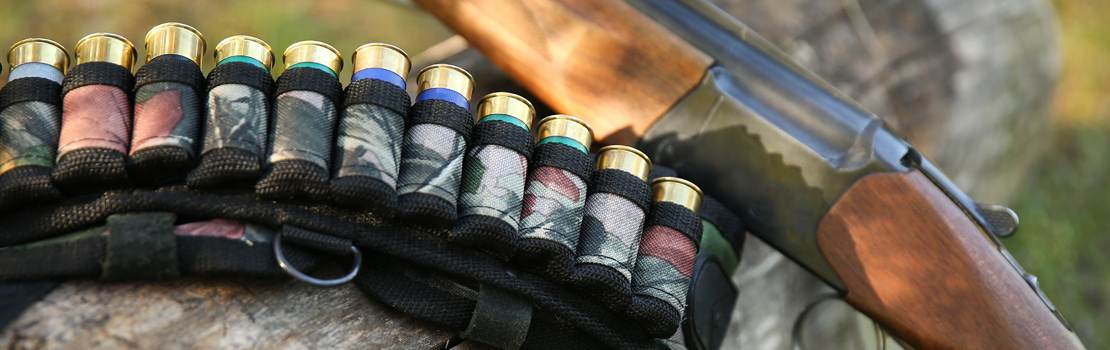
Once a hunter fires a round – whether a single bullet or shot (shotgun pellets) – it doesn’t disappear into thin air. It always hits something; that’s basic physics. Even if it misses the intended target, it will strike whatever is in the background or finally find its way to the ground or surrounding water. If it is made of lead, then it ultimately poisons whatever it strikes.
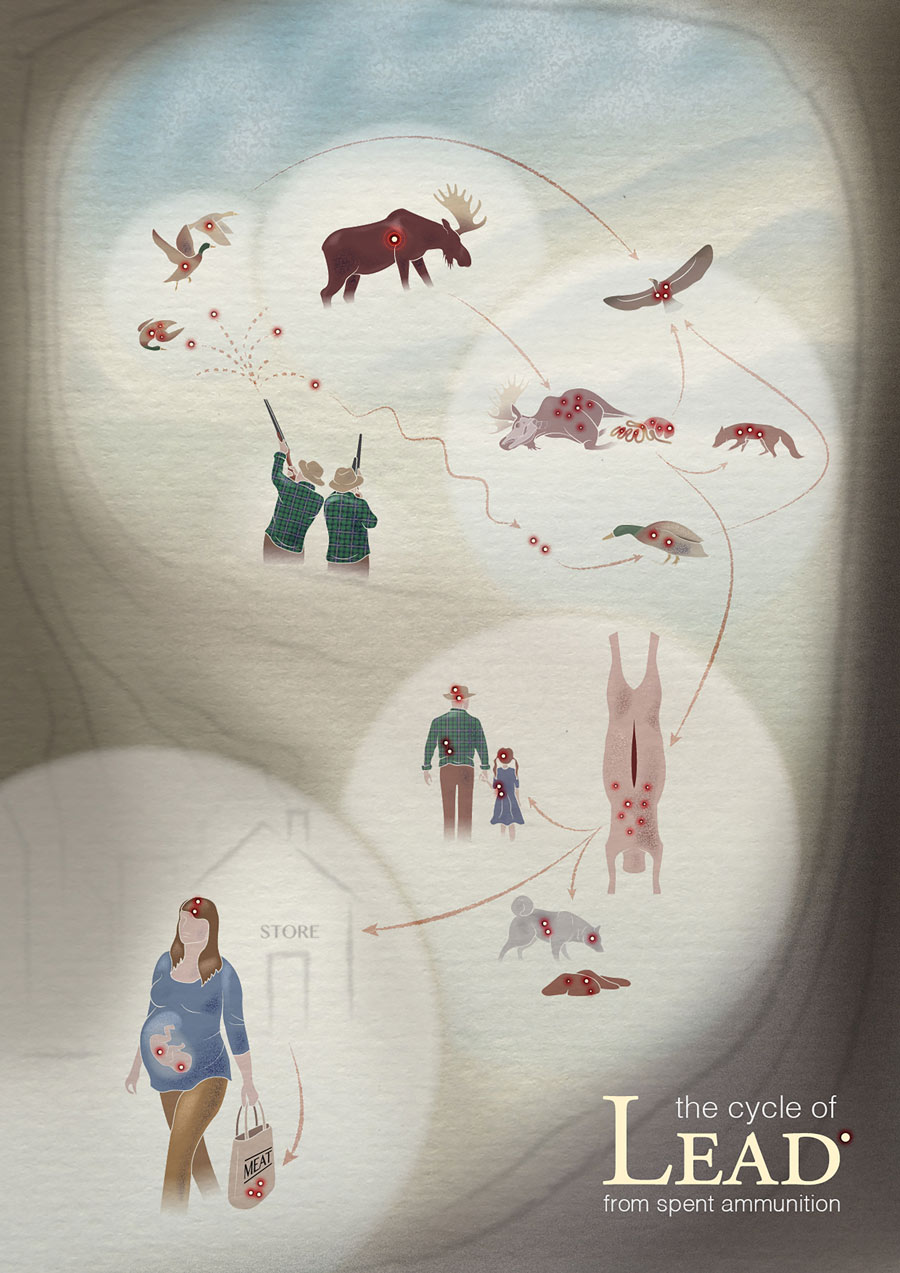
As Arnemo points out, most rifle bullets used for large game hunting are designed to expand upon impact to ensure maximum deadly effect. Again, physics dictates that the forces and energy involved when a round strikes flesh, muscle, and bone are such that expanding, high-velocity lead bullets fragment upon impact, especially in larger game animals. A single round can shatter into millions of smaller fragments up to 45 cm away from the bullet’s trajectory. Critically, most of these shards are too small to be seen with the naked eye and miniscule fragments (nanoparticles) are not even detectable by x-rays.
Despite the availability of non-toxic, non-lead alternatives, hunters seem reluctant to change, and there are troubling reasons for that.The wound ballistics of lead shot or pellets – often used for hunting birds – differs from a single bullet. One shotgun shell can contain 200–400 pellets. Depending on the distance from which a hunter fires and the size of the animal, a significant number of pellets can lodge in the animal. According to Arnemo, contrary to the widespread belief among hunters, lead shot also fragment when striking an animal. As well as shards of lead dispersing in the animals, they can dissolve and poison the surrounding tissues. Both the fragments and the contaminated meat are poisonous when consumed.
The tragedy of the womb
The body has no need for lead. It is not just a non-essential element for human life; it is also highly toxic. Stomach acid is effective at dissolving swallowed lead fragments. Furthermore, certain cooking preparations like marinading or using acidic additives such as wine and vinegar increase lead’s bioaccessibility, making it easier to absorb. What concerns Arnemo is the effect of the build-up of lead through the continued consumption of lead from animals shot in the wild. This can take place over years, even decades, and the insidious nature of such lead exposure means the damage is often hidden until it’s too late. By that time, the lead could have seeped into every major organ, including the brain. Worryingly, research has uncovered that children absorb lead at a much higher rate in their diet than adults.
Although lead toxicity at the cellular and subcellular levels is highly complex, we know that once it enters the body, it starts interfering with various enzymes and creates reactive radicals that damage cell structures, including membranes and even DNA. The lead accumulates in the body over time, affecting the brain, kidneys, and nervous and reproductive systems. Although the body can excrete lead through bile and urine, and in microscopic amounts in hair and nails, the most effective, and unfortunately tragic, way for it to leave the body is when it is transferred from a mother to her foetus during pregnancy through the umbilical cord or to her infant child through breast milk. The damage to the child can be severe, and includes significant cognitive impairment, developmental delays, and neurological damage. Due to the increased need of calcium during pregnancy and lactation, lead will be released from the mother’s bones along with calcium, exposing her and the child to detrimental blood lead levels.

While such dangers may seem distant to city dwellers, they are very real to those in rural areas, such as in Arnemo’s native Norway and elsewhere throughout Europe and North America, where consuming venison is a way of life and hunting using lead bullets and shot is not only common but embraced. Studies have shown high levels of lead in maternal blood, breast milk, umbilical blood, and infant blood in rural communities with high levels of maternal traditional game meat intake. Changing such minds is a challenge, and governments seem unconcerned. What Arnemo and his fellow researchers, especially those in Europe, find surprising is that while there are European Commission regulations governing lead content in meat from farm animals, there are no such regulations governing lead levels in venison. As a result, with little government intervention, the call from scientists for hunters to consider non-lead ammunition alternatives has triggered an open season for the hunting lobby.
Researchers point out that the use of lead ammunition isn’t just an issue for those living in the far-flung parts of the world – it is a global One Health issue.A global One Health issue
Hunters can use alternatives to lead in shot and rifle bullets. These include steel, copper, bismuth, and tungsten. Research has shown that they are as effective as lead but with the significant advantage that they are not toxic – and not only to humans. From bears to eagles, scavenging wildlife are exposed to the dangers of lead shot and bullet fragments in carcasses. Additionally, any lead shot that ends up in the ground or water sources is attractive to seed- and grit-eating birds such as waterfowl and gamebirds. The rest of the lead in the environment is broken down and absorbed by plants and soil. Inevitably, it ends up in the larger food chain, eventually finding its way onto our plates, no matter how far we are away from the killing fields. Also, game meat is minced up, lead and all, and used in pet food exposing dogs and other pets to its toxic effects.
Hunters sometimes argue that non-lead ammunition can cost more. This is a strawman argument. As Arnemo points out, non-lead ammunition is readily available at comparable prices to lead ammunition. Besides, the price of non-lead ammunition is negligible amidst what the typical hunter spends on standard hunting paraphernalia – guns, scopes, binoculars, GPS devices, hunting permits, and camouflage clothing. However, the cost of using lead is high and carried by us all. Arnemo and his fellow researchers therefore point out that the use of lead ammunition by hunters isn’t just an issue for those living in the far-flung parts of the world – it is a global One Health issue. It involves the interconnection between the health of humans, animals, and the environment, and confronting it requires an international, coordinated response guided by science. It is also an ethical issue, not a simple matter of individual choice for hunters. Currently, the onus for change is on those hunters and the lobby groups that encourage the use of lead ammunition. These groups counter the overwhelming scientific evidence of its dangers with wild and unfounded claims that science is demonising the sport of hunting.

Arnemo and fellow US-based researchers highlight the issue in a recent paper, ‘Biting the bullet: A call for action on lead contaminated meat in food banks’. They draw attention to a National Rifle Association initiative, Hunters for the Hungry. The programme operates in more than 40 US states and encourages hunters to take their game meat, often harvested by lead ammunition, for processing, packaging, and donation to food banks for people experiencing poverty. The majority of the meat is not inspected for its lead content. Through a One Health approach, Arnemo continues to advocate for non-toxic, non-lead alternatives as a safe and effective option for all.
Personal Response
If alternatives to lead ammunition don’t fracture as easily, does this mean they prolong animal suffering?No, the effects of a hunting bullet are mainly due to the expansion of the bullet at impact, not the millions of miniscule fragments. Numerous recent studies have shown that non-Pb alternatives (both bullets and shot) are as effective as Pb-based ammunition, and in many cases even better.
Encouraging hunters to switch to non-lead ammunition will require an international, coordinated response. Where is an effective place for individual governments to start?
Due to conservatism, science denial, conspiracy theories etc, a voluntary switch to non-Pb ammunition among the majority of hunters will likely never happen. The only way to solve this global One Health issue is to ban Pb ammunition on national and international levels, as has been done in Denmark and California. The use of Pb shot over wetlands is now banned in the EU (and in several other areas/countries/jurisdictions as well) but compliance is low and enforcement is illusory. A total ban of Pb ammunition is currently being considered in the EU; this has now become a political process with strong opposition from lobbyists from the gun/ammunition industry.