
Tag: polymers
Plastic Free July 2023: Small changes to make big differences

Founded in 2011, the Plastic Free July campaign is the brainchild of the Plastic Free Foundation, a global social movement that is working towards a plastic free world. It is impossible to be unaware of the impact that plastic has had on the world, both positive and negative. Plastic is a lightweight, easily mouldable material with a wide range of […]
Read More… from Plastic Free July 2023: Small changes to make big differences
Mechanochemistry: A new route to sustainable polymer recycling

Plastics and rubbers are some of the most important materials in advanced societies, and hundreds of millions of tonnes are produced every year. Devising efficient and cost-effective ways to recycle these materials has become a crucial environmental concern. Although degradable plastic-based materials can be produced, their practical use is limited by their vulnerability under environmental stress. Professor Junpeng Wang and […]
Read More… from Mechanochemistry: A new route to sustainable polymer recycling
Exiguobacterium degradation of polystyrene: Enlisting bacteria in the war against plastic

Polystyrene is a chemically stable recalcitrant plastic that pollutes many natural environments. Unfortunately, few mechanisms can break down this man-made polymer into its naturally occurring components. Research into the polystyrene-digesting capabilities of the bacteria genus Exiguobacterium sp RIT 594 by Dr André Hudson and his team at the Rochester Institute of Technology in New York, USA, has uncovered the specific […]
Continuous flow strategies for accelerated materials discovery

Polymerisation reactions play a crucial role in the design and optimisation of new materials for many existing and emerging technologies. The large commercial demand for tailored polymers requires developing innovative synthetic approaches that afford precision, control, and automation, while addressing environmental and workplace safety concerns. Dr Tim Erdmann and colleagues at IBM Research, Almaden Lab (USA), are exploring new synthetic routes […]
Read More… from Continuous flow strategies for accelerated materials discovery
High performing monomers and polymers from plant oils

We often think of fossils fuels as a source of energy, but one of the key uses of fossil fuels is as a starting point for the synthesis of new chemical compounds. These range from plastics to pharmaceutical products. In recent years, there has been a push to move to more sustainable chemical feedstocks. Professor Andriy Voronov at North Dakota […]
Read More… from High performing monomers and polymers from plant oils
Improving prospects for polymer surface coatings
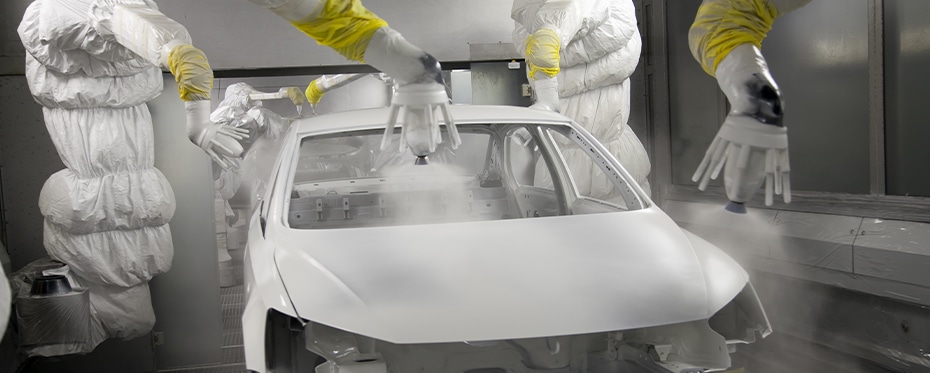
Within the automotive light industry, aluminium is evaporated on plastic high gloss reflector surfaces. From a quality point of view and to meet industry standards, this surface must retain its luminance and reflectiveness for 15 years. However, the non-treated metal parts oxidise, meaning that it loses its luminance and reflectiveness. For this reason, it is protected with silicon oxide or […]
Read More… from Improving prospects for polymer surface coatings