
Tag: Physics
Quantum light for biomedical imaging

Normally, when we photograph an object, we rely on visible light from the sun that is captured directly by the camera sensor. When it comes to looking at cells and tissue samples though, it is often better to use infrared light. Inna Kviatkovsky and Dr Sven Ramelow at the Humboldt University Berlin, together with their collaborators at Max Delbruck Center […]
Hydrogen’s Second Flavour: A Solution to Dark Matter?
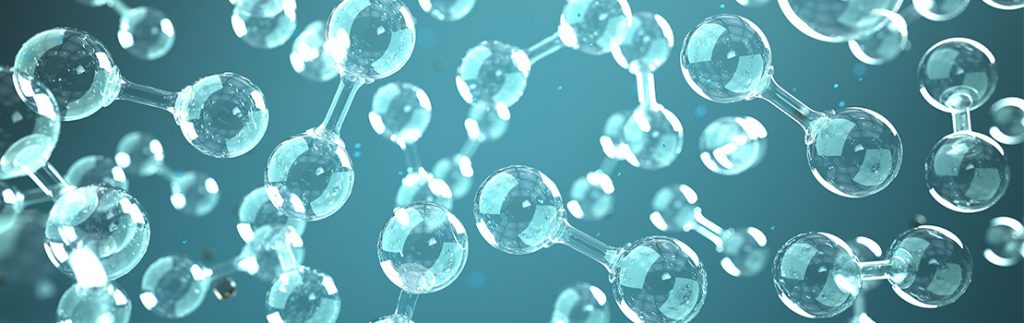
From their observations, astronomers widely predict that dark matter must comprise around 85% of all matter in the universe. So far, however, most theories about the nature of this mysterious source of mass have pinned their hopes on theoretical, as-yet undiscovered particles. Professor Eugene Oks from the Physics Department of the Auburn University has proposed that a more natural explanation […]
Read More… from Hydrogen’s Second Flavour: A Solution to Dark Matter?
Stress, our hated guard: Or how theoretical physics could explain the phenomenon of life
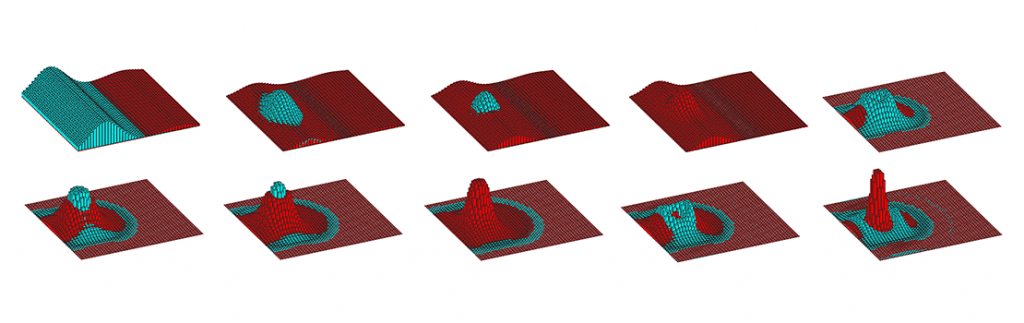
In his new book – Generalized Lagrangian Approach and Behavior of Living Systems – Professor Uziel Sandler, from the Lev Academic Centre (JCT), explains how a specific generalisation of a Lagrangian function can help theoretical physics to describe the phenomenon of life. He demonstrates how the generalised Lagrangians allow Lagrangian dynamics to be used to describe the behaviour of living […]
The REEMS Programme: discovering untapped talent
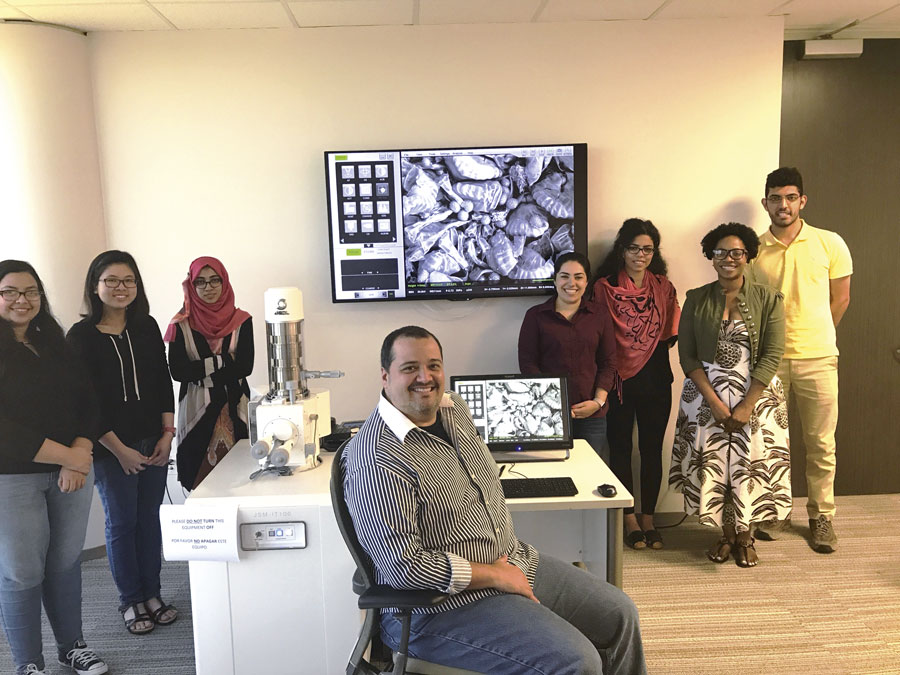
To many, materials science represents a fairly inaccessible, complicated topic of science requiring a highly academic approach. Mr Bartlett Sheinberg’s Research Experiences and Exploration in Materials Science (REEMS) Programme aims to overcome this – contextualising materials science for community college students. The programme’s approach also aims to instil confidence in these students and provide them with skills to help them progress […]
Read More… from The REEMS Programme: discovering untapped talent
Pushing the boundaries – interrogating magnetism at material interfaces

In order to keep improving electronic devices, whether it be computers or sensors, researchers must understand what is going on, on an atomic level. Understanding the behaviour of ions within materials is difficult enough, but when you put two materials together it gets much more complicated. Dr Mikel Holcomb, Associate Professor from West Virginia University, has dedicated her work to finding […]
Read More… from Pushing the boundaries – interrogating magnetism at material interfaces