
Tag: National Autonomous University of Mexico
What tangled webs we weave: Measuring federal public expenditure

The Social Accounting Model (SAM) is used in social and economic analyses to explain the transfers made between institutional sectors. It quantifies these exchanges to analyse the financial and economic structure of a country, as well as the resulting social benefits. Dr Marcela Astudillo Moya and Dr Raúl Porras Rivera at the National Autonomous University of Mexico apply the recommendations […]
Read More… from What tangled webs we weave: Measuring federal public expenditure
Exploring transitions to chaos in complex systems

Previously, Dr Alberto Robledo of Instituto de Física, Universidad Nacional Autónoma de México (UNAM) showed how transitions to chaos in nonlinear systems can be expressed in the language of statistical mechanics. Additionally, in his studies he shows how the same mathematical laws can link these transitions to the behaviours of different types of complex systems. His results may lead to […]
Read More… from Exploring transitions to chaos in complex systems
Obtaining Tsallis entropy at the onset of chaos

Tsallis entropy aims to extend traditional statistical mechanics, but some physicists believe the theory is incompatible with the fundamental principles of thermodynamics. Dr Alberto Robledo of Instituto de Física, Universidad Nacional Autónoma de México (UNAM) shows for the first time how Tsallis entropy can explain natural phenomena that turn out to be surprisingly linked to the transitions from regular to […]
Read More… from Obtaining Tsallis entropy at the onset of chaos
The biodegrading functions of microbial communities in polluted freshwaters
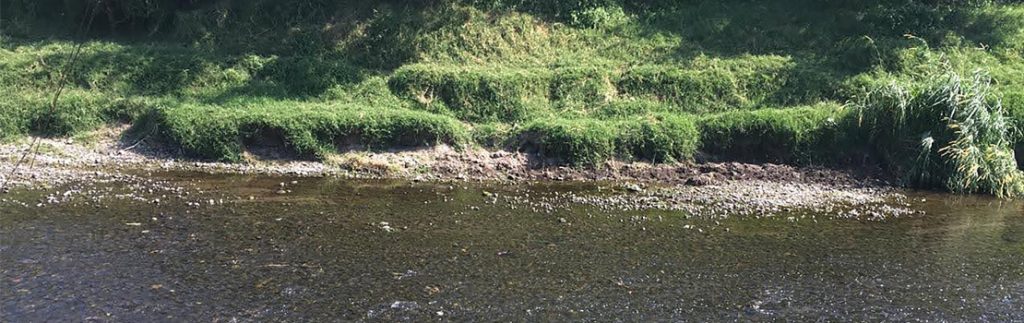
Pollution is a selective pressure that enriches microorganisms at polluted freshwater sites. Some microbial species can adapt to the levels of pollution in water streams, displaying metabolic capacities that allow them to degrade the contaminants. Dr Ayixon Sánchez-Reyes and Dr Luz Bretón-Deval, from the Institute of Biotechnology of the National Autonomous University of Mexico, study the microbial biodiversity landscapes of […]
Read More… from The biodegrading functions of microbial communities in polluted freshwaters
Integrative plant responses: How seagrasses adjust to light
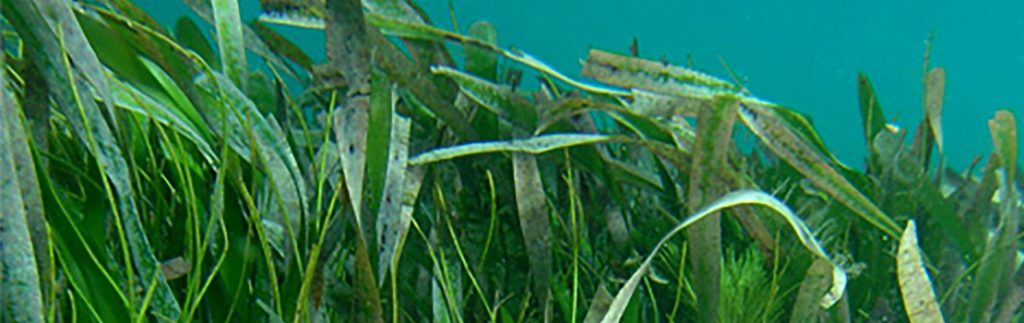
The shallow coastal waters that house tropical seagrass meadows are often highly illuminated. In the Caribbean, the main habitat builder is the species Thalassia testudinum, characterised by a leaf physiology adapted to shade. Dense canopies allow the seagrass to survive in such environments, but depth colonisation requires canopy and underground mass adjustments. These integrative plant responses are essential to adjusting […]
Read More… from Integrative plant responses: How seagrasses adjust to light
Scalloped hammerhead sharks have more complex migratory routes than expected
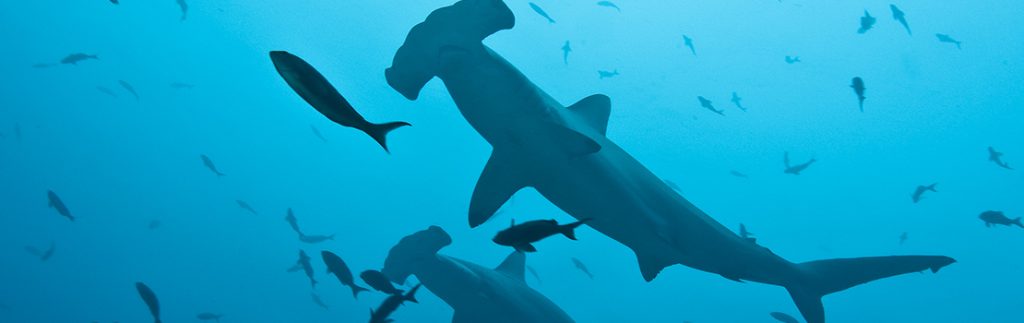
Using a new method to study migratory routes of scalloped hammerhead sharks, Dr Claire Coiraton and Dr Felipe Amezcua, based at the National Autonomous University of Mexico, identified a more complex picture than previously thought. It turns out that not all sharks follow the same pattern of movements, with some preferring to stay in coastal areas while others opt for […]
Read More… from Scalloped hammerhead sharks have more complex migratory routes than expected