
Tag: México
What tangled webs we weave: Measuring federal public expenditure
The Social Accounting Model (SAM) is used in social and economic analyses to explain the transfers made between institutional sectors. It quantifies these exchanges to analyse the financial and economic structure of a country, as well as the resulting social benefits. Dr Marcela Astudillo Moya and Dr Raúl Porras Rivera at the National Autonomous University of Mexico apply the recommendations […]
Read More… from What tangled webs we weave: Measuring federal public expenditure
Combatting antimicrobial resistance using novel small fusion proteins
Antibiotic resistance is a public health burden worldwide. Alternatives to antibiotics that can counter the detrimental effects of resistant ‘superbugs’ are urgently needed. Dr Xristo Zarate at the Autonomous University of Nuevo Leon in Mexico and his collaborators have worked extensively on developing novel small carrier proteins, like SmbP and CusF3H+, for recombinant protein and peptide expression and purification in […]
Read More… from Combatting antimicrobial resistance using novel small fusion proteins
Exploring transitions to chaos in complex systems

Previously, Dr Alberto Robledo of Instituto de Física, Universidad Nacional Autónoma de México (UNAM) showed how transitions to chaos in nonlinear systems can be expressed in the language of statistical mechanics. Additionally, in his studies he shows how the same mathematical laws can link these transitions to the behaviours of different types of complex systems. His results may lead to […]
Read More… from Exploring transitions to chaos in complex systems
Obtaining Tsallis entropy at the onset of chaos

Tsallis entropy aims to extend traditional statistical mechanics, but some physicists believe the theory is incompatible with the fundamental principles of thermodynamics. Dr Alberto Robledo of Instituto de Física, Universidad Nacional Autónoma de México (UNAM) shows for the first time how Tsallis entropy can explain natural phenomena that turn out to be surprisingly linked to the transitions from regular to […]
Read More… from Obtaining Tsallis entropy at the onset of chaos
From friend to foe: Food strains share their toxic genes in E. coli
Food-borne bacteria can cause life-threatening disease, yet it is still unclear why some strains are tolerated by the host. To find an answer, a project led by Professor Rosa del Carmen Rocha-Gracia (Benemérita Universidad Autónoma de Puebla, Mexico) and Professor Manel Camps (University of California Santa Cruz, USA) analysed the genetic diversity of Escherichia coli populations, comparing isolates from food […]
Read More… from From friend to foe: Food strains share their toxic genes in E. coli
Travel to Cornwall for your next holiday…then into space!

Idyllic beaches, rugged coastal lines and quaint seaside towns make Cornwall one of the most popular tourist destinations for staycationers and globetrotters alike. Yet, it’s also set to become the home of the UK’s first ever spaceport for space travel! Virgin Orbit is soon set to launch it’s fifth mission of putting thrill-seekers and space-tech clients into space from Cornwall. […]
Read More… from Travel to Cornwall for your next holiday…then into space!
Shining a spotlight on diabetic retinal detachment
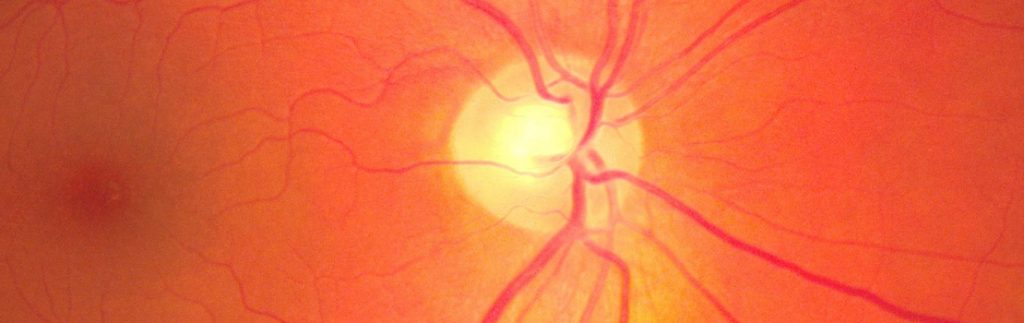
Diabetes mellitus affects millions of people globally. Patients are at risk of associated diseases and often encounter problems with their eyesight. Dr Miguel A Quiroz-Reyes, retina specialist at Oftalmologia Integral ABC, Mexico City, Mexico, set out to investigate the outcomes of diabetic patients with advanced complications of the retina. These patients had developed diabetic macula-off tractional retinal detachment, a known […]
Read More… from Shining a spotlight on diabetic retinal detachment
Mexico’s 1887 Sonora earthquake: Lessons from the aftershocks
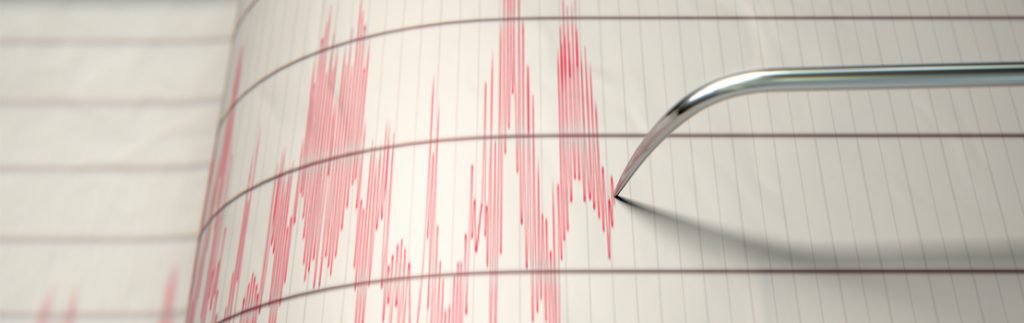
In May 1887, a magnitude (Mw) 7.5 earthquake rocked Sonora, Mexico. While the immediate effects impacted local communities, the event has become the world’s longest recorded normal-fault rupture in historic time. Professor Raúl Castro from the Department of Seismology at CICESE, Mexico, used a network of seismic monitoring equipment to uncover evidence that aftershocks from the 1887 event are still […]
Read More… from Mexico’s 1887 Sonora earthquake: Lessons from the aftershocks
Corporate sustainability: Benefits and drawbacks in the implementation of green business initiatives

As the public becomes increasingly cognisant of its effect on the environment, companies are progressively looking for green initiatives to implement and improve their corporate sustainability strategies. Dr Roberto Sarmiento at the Autonomous University of San Luis Potosí, and his team, examined potential trade-offs that could occur during the implementation of a green initiative at an SME in Mexico. The […]
The biodegrading functions of microbial communities in polluted freshwaters
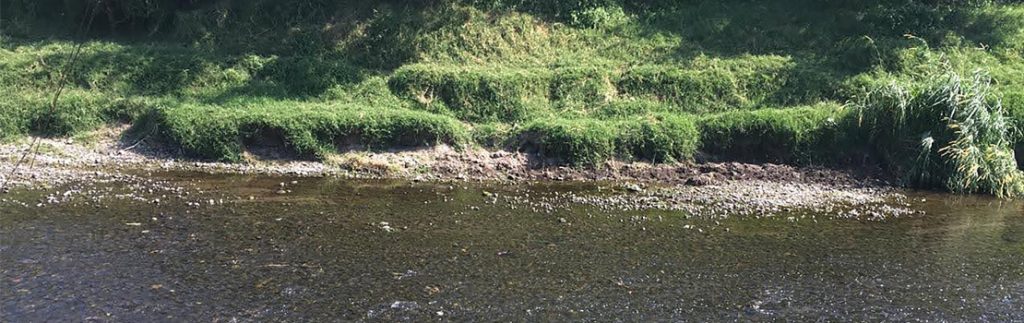
Pollution is a selective pressure that enriches microorganisms at polluted freshwater sites. Some microbial species can adapt to the levels of pollution in water streams, displaying metabolic capacities that allow them to degrade the contaminants. Dr Ayixon Sánchez-Reyes and Dr Luz Bretón-Deval, from the Institute of Biotechnology of the National Autonomous University of Mexico, study the microbial biodiversity landscapes of […]
Read More… from The biodegrading functions of microbial communities in polluted freshwaters