
Careers in Science: Summer Training in Environmental and Pharmacological Sciences (STEPS)
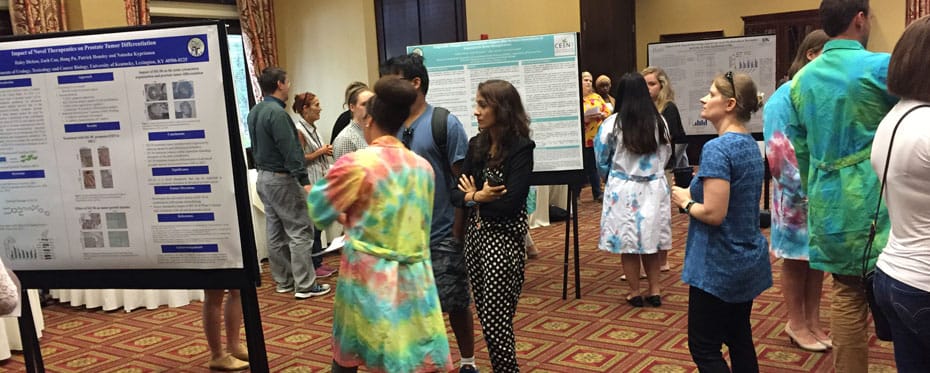
The future of scientific research depends on a talented, diverse and inclusive workforce with high scientific proficiency. Undergraduate research experiences have been shown to play a key role in encouraging […]
Creating a better oscillator: Dissipative solitons and travelling-wave field‑effect transistors

The key to improving the performance of high-speed electronic circuits is the generation of short electrical pulses with reduced phase noise. Dr Koichi Narahara of the Department of Electrical and Electronic […]
Clinical relevance aims to uncover novel regulators of human coronary artery function

Charting new territories in vascular disease research, The Human Vascular Research Group (HVRG) at the Medical College of Wisconsin uses fresh human tissues to address important questions in vascular biology. […]
Alcohol overuse: cutting to the bone

Building on several decades of research, Dr Martin Ronis, a Professor at the Louisiana State University Health Sciences Center-New Orleans explores the effects of alcohol on bone turnover. His current […]
What is the impact of my research? Two questions every researcher should ask themselves

Professor Mark Reed, Newcastle University, is an internationally recognized expert in impact and the founder of Fast Track Impact. Using the latest research in the area, Fast Track Impact provides […]
The art of science communication: Q&A with Sam Illingworth

Dr Sam Illingworth is a Senior Lecturer in Science Communication at Manchester Metropolitan University in the UK. He takes a creative approach to science communication, researching the relationship between science […]
Read More… from The art of science communication: Q&A with Sam Illingworth
Designing catalysts bit by bit
Catalysis, using reagents to speed up chemical reactions, is big business. From synthesising new chemicals to cleaning up the exhaust fumes from cars and sustainable energy devices such as hydrogen fuel cells, catalysts play […]
Cleaner pathways to chemical synthesis via new generation catalysts

The synthesis and manufacture of chemicals, and chemical products, has typically relied on petroleum-based feedstocks. Even hydrogen, often hailed as a ‘clean fuel’ and an important component in many chemical reactions, is sourced […]
Read More… from Cleaner pathways to chemical synthesis via new generation catalysts
Seeing the structures of molecules: insights from NMR and industry

Many of the essential chemical constituents of life, including carbohydrates, are made up of complex atomic arrangements. Knowing the particular structure of a compound is important not only for identification […]
Read More… from Seeing the structures of molecules: insights from NMR and industry
Configuring new bonds between first-row transition metals
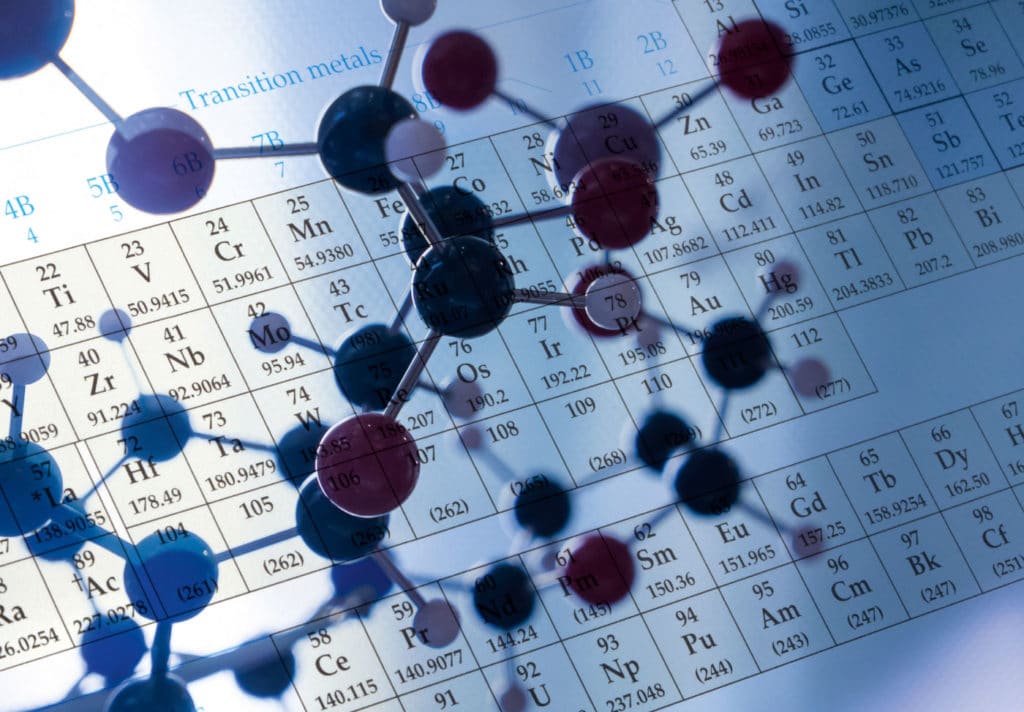
Transition metals are some of the most important elements in the Periodic Table for their wealth of applications, spanning catalysis to biology. The rich chemistry of the transition metals arises […]
Read More… from Configuring new bonds between first-row transition metals