
The ‘Nuggets’ of Knowledge (NoK) platform: How past experiential health emergency knowledge can inform future responses
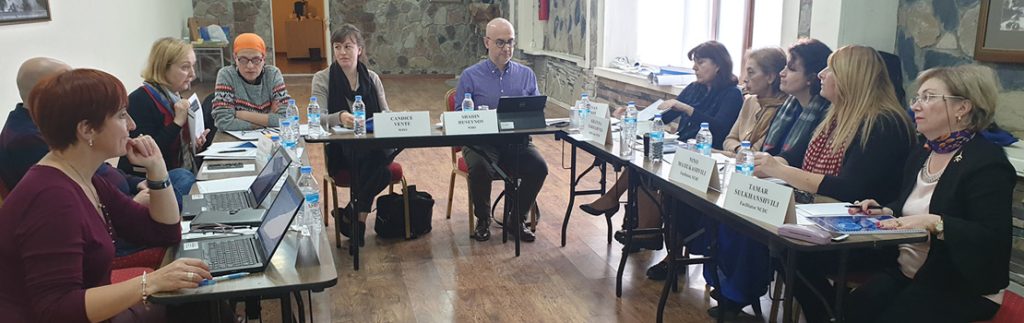
The knowledge gained during the COVID-19 pandemic and other health emergencies could prove invaluable for devising responses to and planning for future health crises. Dr Landry Ndriko Mayigane and Dr […]
Rare disease drug development: Time for a new approach?

A limited patient population is a key challenge in rare disease drug development. Professor Shein-Chung Chow of Duke University School of Medicine, USA and his research partners explore innovative approaches […]
Read More… from Rare disease drug development: Time for a new approach?
Irreversible electroporation: A safe and effective therapy for low to intermediary prostate cancer risk profiles
Prostate cancer affects millions of men globally, and is also the third-largest cause of cancer-related deaths among men. Irreversible electroporation (IRE) is one of the more targeted, focal, and minimally […]
Regenerative medicine: Revolutionising osteoarthritis treatment

Osteoarthritis (OA) is the most common joint disease, affecting over 528 million people worldwide. OA results in chronic pain, stiffness, and reduced joint function. Conventional treatments focus on symptomatic relief […]
Read More… from Regenerative medicine: Revolutionising osteoarthritis treatment
Resilience, scepticism, and mRNA: The story of Katalin Karikó

The COVID-19 pandemic presented the world’s governments and health organisations with a vaccination challenge on a scale it had never experienced before. Messenger RNA (mRNA) vaccines were critical in the […]
Read More… from Resilience, scepticism, and mRNA: The story of Katalin Karikó
Embracing Indigenous knowledge for sustainable urban transformation

Mainstream governance structures are rooted in Eurocentric approaches. At the University of Waikato in Hamilton, New Zealand, Dr Rita Dionisio studies culturally reflective, place-based approaches to improving and measuring socio-ecological wellbeing […]
Read More… from Embracing Indigenous knowledge for sustainable urban transformation
Barth syndrome: A potential treatment for a rare disease
Barth syndrome is a rare disorder in males caused by a variant of the gene TAFAZZIN. It affects the metabolism of the fat molecule cardiolipin in mitochondria, resulting in the […]
Read More… from Barth syndrome: A potential treatment for a rare disease
CO2 conversion for a circular carbon economy

A circular carbon economy – where carbon released from the Earth is captured and repurposed – is a promising concept, and CO2 conversion to sustainable products has been at the […]
Read More… from CO2 conversion for a circular carbon economy
Curing the incurable: RNA isoforms may hold the key to defeating Alzheimer’s disease
Groundbreaking research on RNA isoforms in Alzheimer’s disease (AD) has revealed another layer of genetic complexity that has been previously overlooked. Using cutting-edge sequencing technology, Dr. Mark Ebbert and colleagues […]
Read More… from Curing the incurable: RNA isoforms may hold the key to defeating Alzheimer’s disease
Vibration mitigation: New Force-Network based granular damping technology

Vibration damping plays a crucial role in enhancing human comfort, safety, and well-being across various aspects of daily life. In transportation, effective vibration damping in vehicles such as cars, trains, […]
Read More… from Vibration mitigation: New Force-Network based granular damping technology