
Tag: climate change
Water and planetary health: Protecting the lifeblood of human civilisation

Water is the lifeblood of planetary health and human civilisation. As a critical source of fresh water, rivers underpin civilisations, past and present. However, rivers constantly change in response to environmental and human pressures. Protecting global river systems from climate change and other anthropogenic activities (e.g., mining, pollution, dam construction), and understanding the interactions with human health (e.g., through the […]
Read More… from Water and planetary health: Protecting the lifeblood of human civilisation
Climate risk mapping provides rice growers with adaptation options in the Mekong River Delta
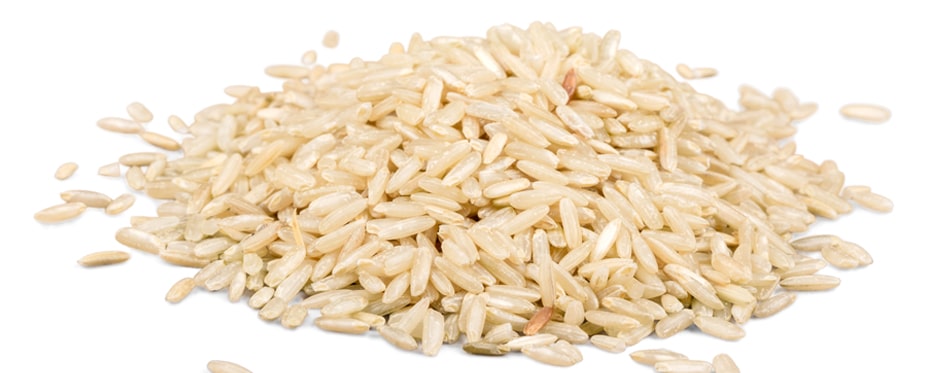
The Mekong River Delta in Vietnam accounts for over half of the country’s domestic rice production yet is increasingly affected by climate change. Mr Le Thanh Tung, Mr Bui Tan Yen and Mr Nguyen Hong Son from the Ministry of Agriculture and Rural Development have jointly worked with the CGIAR Research Program on Climate Change, Agriculture and Food Security in […]
The great grunion run: Monitoring grunion runs to inform conservation

Grunion runs describe the unusual breeding behaviour of the California grunion, which come ashore on sandy beaches to spawn. Fertilised eggs then incubate in the sand and only hatch when scouring waves from the next spring tide reveal them. These life history traits leave both adult fish and eggs vulnerable to negative human impacts. Professor Karen L. M. Martin from […]
Read More… from The great grunion run: Monitoring grunion runs to inform conservation
Climate change impacts on freshwater resources in southern Florida

As climate changes and sea levels rise, saltwater intrudes into the groundwater that sustains humans and natural ecosystems. These changes are often analysed using complex and highly detailed models analogous to weather forecast models. In this work, Dr Joseph Park and colleagues used a simpler, holistic approach: an agent-based model reflecting the response of different vegetation types to changing environmental […]
Read More… from Climate change impacts on freshwater resources in southern Florida
Climate change: 40 years on the front lines of the climate change wars

Gary Yohe, a Professor of Economics and Environmental Studies at the Wesleyan University has been on the front lines of climate change research for the last 40 years. This is an overview of his influential work on climate change risk management, adaptation, mitigation, detection and attribution. Gary Yohe specialises in Microeconomic theory, Natural Resources, and Environmental Economics. As well as […]
Read More… from Climate change: 40 years on the front lines of the climate change wars
Facing climate risk management together in Colombia
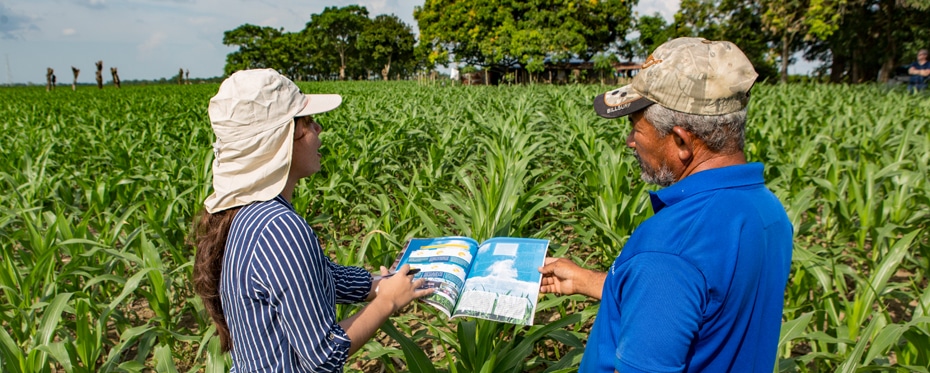
With climate change altering the short-term weather and causing long-term climatic fluctuations, farming communities are becoming increasingly susceptible to climatic risk. However, with the help of the CGIAR Research Program on Climate Change, Agriculture and Food Security (CCAFS), a participatory approach is being taken to climate risk management. As a result of south-south collaboration, Local Technical Agro-climatic Committees (LTACs) have […]
Read More… from Facing climate risk management together in Colombia
Climate change & the Caribbean: Enhancing coastal resilience

Climate change poses a significant threat to Caribbean communities. Building coastal resilience and developing adaptation strategies through convergence research is vital to mitigating the impacts. To address this issue, Dr Rita Teutonico of Florida International University, along with colleagues from Mexico and Cuba, brought together an interdisciplinary group of ecologists, hydrologists, oceanographers, economists, social scientists, engineers, architects, and community practitioners […]
Read More… from Climate change & the Caribbean: Enhancing coastal resilience
Drilling for knowledge: A collaborative approach to ocean drilling in the Arctic

The Arctic contains important records of tectonic and geological oceanic history, yet is a vastly under-sampled area. However, a better knowledge of the past climate and tectonic history of this region is crucial to understanding contemporary climate change and modern geological hazards. This is what makes the research of Dr Lindsay Worthington at the University of New Mexico and fellow […]
Read More… from Drilling for knowledge: A collaborative approach to ocean drilling in the Arctic
Measure what you treasure How Global Footprint Network is using data to show people how to protect our planet

There is only one Earth, but humans are consuming biological resources as if there were more Earths available. Last year, Global Footprint Network marked ‘Earth Overshoot Day’ on 1st August; humanity had used our budget of resources for the year five months early. For over a decade, Global Footprint Network has been striving to reduce this ecological deficit through education […]
Going with the flow: Water quality and community health in Costa Rica
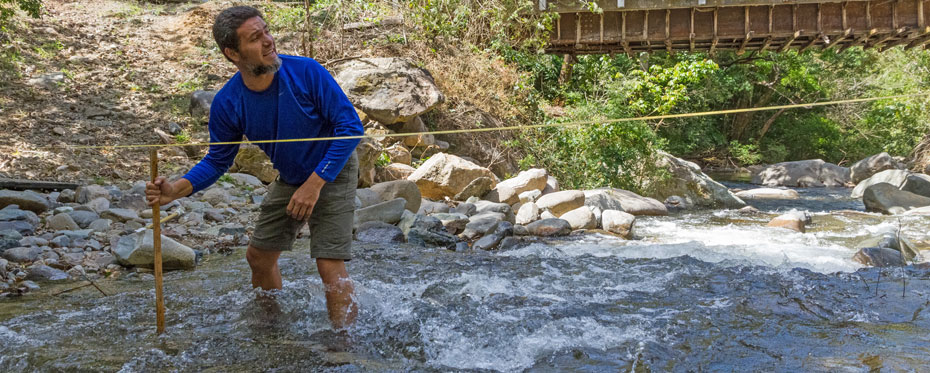
Water quality is one of the most pressing issues facing the world, with solutions to combat poor water quality remaining elusive. This is what makes the work of Dr Shahady and fellow researchers at the University of Lynchburg and the University of Georgia Costa Rica so important. Their pioneering work in promoting community engagement with a macroinvertebrate index to ensure […]
Read More… from Going with the flow: Water quality and community health in Costa Rica