
Tag: Hearing loss
From mice to men: Will we soon be able to restore hearing loss?

Globally, hearing impairment is a common disability – especially among elderly adults. Hearing loss caused by damaged sensory receptor cells (hair cells) inside the ear cannot be reversed – and regeneration of this type of cell does not occur in humans. Associate Professor Brandon Cox and colleagues at Southern Illinois University School of Medicine, USA, have been studying the regeneration […]
Read More… from From mice to men: Will we soon be able to restore hearing loss?
Personalised strategies for cochlear implant surgery and hearing rehabilitation
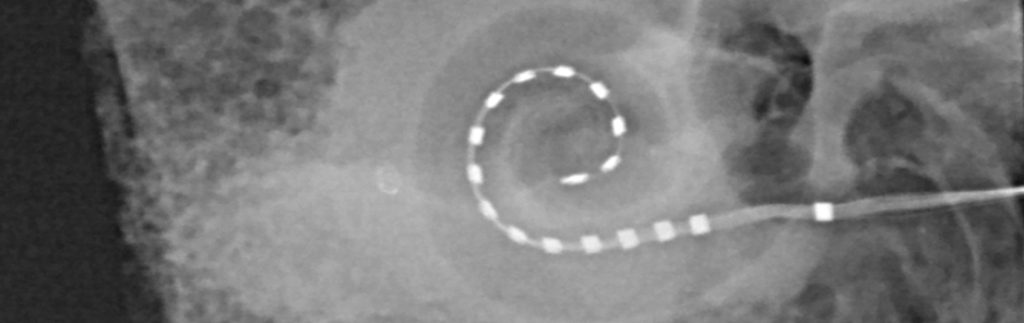
Hearing loss is a common problem that usually develops with older age, affecting communication and making everyday life extremely difficult. If left untreated, it can lead to memory loss, social isolation, and mental health problems. Cochlear implants (CI) are an effective solution where hearing aids can’t help, but they are not fitted as often as they could be, as clinicians […]
Read More… from Personalised strategies for cochlear implant surgery and hearing rehabilitation
Usher syndrome: Recent advances in our understanding of genes and therapeutics

Usher syndrome is a rare disease that affects the sensory systems of vision, hearing, and balance. Recent advances in scientific technologies reveal the genes involved in Usher syndrome, their varying phenotypic outcomes, and avenues for therapeutic development. Dr Aziz El-Amraoui of the Pasteur Institute in Paris, France, and Dr Gwenaelle Géléoc of Boston Children’s Hospital and Harvard Medical School in […]
Read More… from Usher syndrome: Recent advances in our understanding of genes and therapeutics
Hearing loss: who gains the most from cochlear implants?

Hearing loss can cause severe disabilities and impair daily life. Cochlear implants may be an option for those who experience extreme deafness, but there are long waiting lists for potential recipients in countries with limited healthcare options. Paula Greenham of Greenham Research Consulting has investigated what factors are most likely to result in improved quality of life for individuals requiring […]
Read More… from Hearing loss: who gains the most from cochlear implants?
Transtympanic injections to prevent hearing loss caused by cisplatin

Dr Sofia Waissbluth from The Pontificia Universidad Católica de Chile is specialised in otolaryngology (conditions of the head and neck). She has reviewed clinical trials that use transtympanic injections to prevent hearing loss caused by the chemotherapeutic agent cisplatin. To date there is no ‘one-shot’ solution to protect or cure patients from hearing loss. However, combinational therapy using transtympanic injections […]
Read More… from Transtympanic injections to prevent hearing loss caused by cisplatin
Let’s hear it for the proteome

Hearing loss is one of the most common sensory impairments, affecting 250 million people worldwide. The causes of deafness, such as exposure to loud noise, are relatively well known, but exactly how they result in hearing loss remains unclear. Dr Jeffrey Savas, Assistant Professor of Neurology at Northwestern University, Feinberg School of Medicine, USA, heads up a lab dedicated to […]