
Tag: education
A place of knowledge and connection: Developing a health and wellbeing framework for public libraries

Debra Rosenfeldt, Head of Library Sector Engagement at State Library Victoria and Jane Cowell, CEO, Yarra Plenty Regional Library Corporation are part of a team of library professionals who are developing a Health and Wellbeing Framework for public libraries in Victoria, Australia. The research undertaken demonstrates how libraries, through collaboration with their health and community partners, can deliver in the […]
You are your most important teacher (and what to do about it)
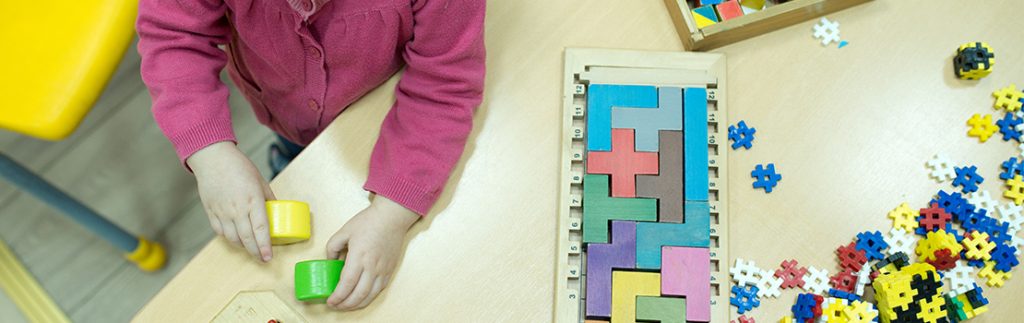
Dr Robert Hahn, Adjunct Associate Professor in the Department of Anthropology at Emory University, Atlanta, describes how learning is an internal dialogue, as we continuously build on the knowledge we already possess in our minds. His synthesis of research shows that your most important teacher is actually yourself. He argues that the classroom that recognises that we can learn how […]
Read More… from You are your most important teacher (and what to do about it)
Learning to lead: Can group reflection help train school leaders?

With greater student diversity, stricter standards, and school staff and funding in flux, the task of school leadership has become increasingly complex. School leaders require training to help them coach and manage teachers through this troublesome terrain. Against this backdrop, Dr Ellen Daniëls, researcher at the KU Leuven Public Governance Institute in Belgium, investigates group reflective learning as a tool […]
Read More… from Learning to lead: Can group reflection help train school leaders?
V2A2: A tool to promote patient agency through effective patient information

The Melanoma Patient Network Europe (MPNE) attaches particular importance to effective scientific patient information. As a patient community with a keen research interest, the network has over the years developed its own methodology and standards on how to rapidly and accurately share scientific information even across language boundaries. Bettina Ryll, Gilliosa Spurrier and Violeta Astratinei, founders of MPNE, have developed […]
Read More… from V2A2: A tool to promote patient agency through effective patient information
Phones down, eyes up: Tackling media misbehaviour in the classroom

In the age of smartphones, teachers must compete for the attention of students against a world they possess in their pockets. And the stakes are high for educational outcomes. When pupils are glued to their phones in class, they disrupt their own learning as well as that of others, while increasing the teacher’s stress and risk of burnout. So how […]
Read More… from Phones down, eyes up: Tackling media misbehaviour in the classroom
How do I choose? Teachers making sense of pedagogical responsibility

Doctoral candidates Grace A. Chen and Samantha A. Marshall, and Dr Ilana S. Horn, Professor of Mathematics Education, from the Department of Teaching and Learning at Vanderbilt University Peabody College, are investigating how teachers make sense of their pedagogical responsibility. During the course of their research, they record a conversation among teachers triggered by the question ‘for what?’ they teach […]
Read More… from How do I choose? Teachers making sense of pedagogical responsibility
How dialogue and democracy evolve through the interactions of children
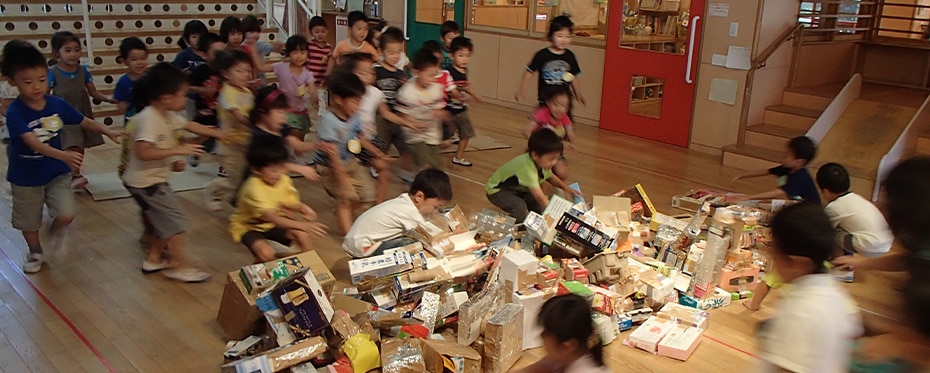
It used to be said that children should be ‘seen and not heard’. However, since 1989 the United Nations enshrined child-centred education into its core values, and this educational style is now the norm for many societies. Recognising children as human beings with individual rights and agency, this style of education aimed to change how society views and treats children. […]
Read More… from How dialogue and democracy evolve through the interactions of children
Teaching words and how words work

Language is such a fundamental part of our being that vocabulary acquisition can be taken for granted. But vocabulary learning is a mammoth task, not least as it’s estimated that English-speaking students will encounter around 150,000 different words during their school career. American educator and researcher Elfrieda H. Hiebert has used digital technology to analyse thousands of texts to discover more about […]
A conceptual approach for interpreting the expanding instances of the internationalisation of education

The internationalisation of education (IE) has accelerated across the past two decades. Although there are now a range of representations and discussions of IE, lacking is a historically-informed framework to connect domains and levels of IE practices. Dr Paul Tarc from Western University argues for a conceptual approach to IE, one that includes theorising past and present enabling conditions of international education […]
Learning through play: New perspectives on early years development

Scientists readily acknowledge that species that play the most are the most intelligent. New research is beginning to explore the role that play has on children’s learning and development. Whilst the definition of play can be subjective, it is integral to children’s development of language skills, social skills, intellectual and emotional intelligence. Adults’ role in play is also important, providing […]
Read More… from Learning through play: New perspectives on early years development