
Tag: education
Food Waste-to-Energy: A project-based school learning experience

One of the challenges facing the uptake in renewable energy and waste-reduction methods is sufficiently changing peoples’ perceptions to ensure a cultural shift needed for momentum. A possible model for achieving this sits in the small village of Potsdam in the US state of New York. Professors Jan DeWaters and Stefan J Grimberg at Clarkson University have established an ongoing […]
Read More… from Food Waste-to-Energy: A project-based school learning experience
Inclusion at a crossroads: Special education in Ireland

Special education in Ireland has changed dramatically in recent years, as policymakers and educators have sought to improve learning for students with additional learning needs and/or disabilities. Following Ireland’s ratification of the UN Convention on the Rights of Persons with Disabilities (UNCRPD), inclusive education experts Joanne Banks and Michael Shevlin of Trinity College, Dublin, argue that inclusion is at a […]
Read More… from Inclusion at a crossroads: Special education in Ireland
The M-Factor: An experiential learning student competition
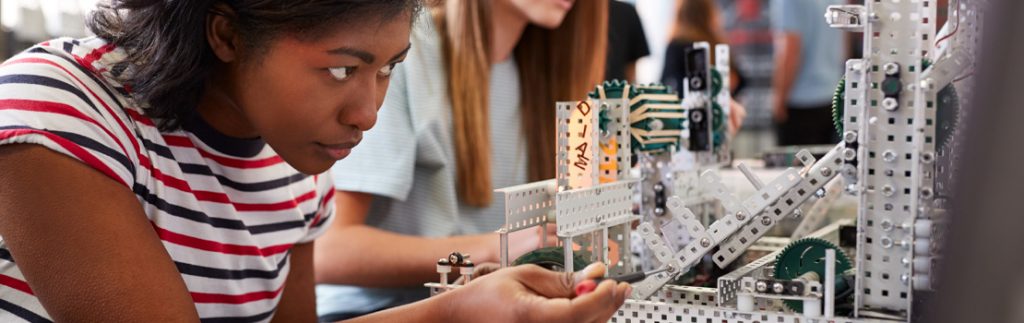
How might the format of reality TV shows be adapted to the academic environment to help engineering students develop management skills? That was the aim of a research project devised by Professor Theomary Karamanis, from Cornell University in New York in the United States, and Professor Allan MacKenzie, from McMaster University in Ontario, Canada. The findings show that not only […]
Read More… from The M-Factor: An experiential learning student competition
An instrument for measuring Assessment for Learning (AfL) in the classroom
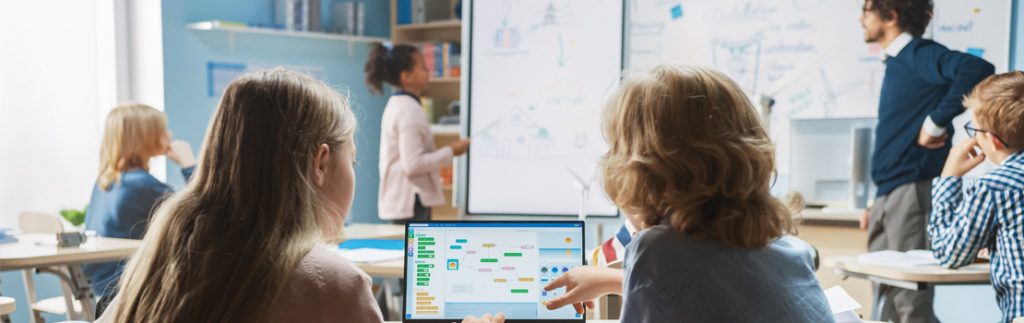
This article introduces educational researchers to the Assessment for Learning Measurement instrument (AfLMi). Based on research by Zita Lysaght and Michael O’Leary at Dublin City University, in partnership with Larry Ludlow at Boston College, the AfLMi consists of 20 statements relating to four key assessment for learning (AfL) strategies recommended in the assessment literature. As designed, the instrument is intended […]
Read More… from An instrument for measuring Assessment for Learning (AfL) in the classroom
Structured expert judgment using the Classical Method
When complex decisions must be made while data is unavailable, structured expert judgment can be used to combine uncertainty distributions resulting from experts’ assessments. Roger Cooke, the Chauncey Starr Senior Fellow at Resources for the Future, and Emeritus Professor at Delft University of Technology, created the well-known Classical Model to quantify uncertainty using expert opinion. Together with Dr Tina Nane, […]
Read More… from Structured expert judgment using the Classical Method
Understanding and responding to climate change: our favourite climate research from 2021

Climate change solutions must reach across education, agriculture, energy production, politics and policymaking, manufacturing, travel, transport – almost every aspect of life. The six articles highlighted below demonstrate the breadth of research being undertaken by scientists globally as they work to understand the complex impacts of climate change, design new technologies and processes for a greener future, assess the financial […]
How to use exemplars and rubrics to improve student outcomes
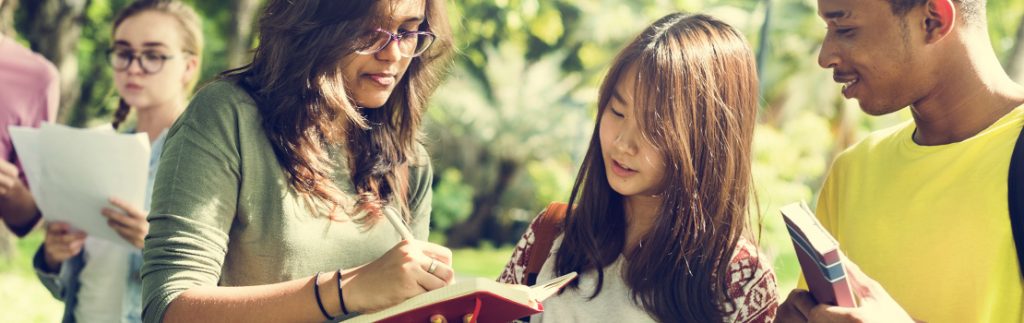
Associate Professors in the Faculty of Education and Social Work at the University of Auckland, Eleanor Hawe and Helen Dixon, specialise in evaluating and improving learning assessments. Eleanor is interested in goal setting, feedback, and peer review. Helen focuses on teachers’ beliefs and their effect on learning. In their study, ‘Using rubrics and exemplars to develop students’ evaluative and productive […]
Read More… from How to use exemplars and rubrics to improve student outcomes
Intergenerational mobility and school inequality in the US

Children of different income groups attend schools of different quality. To understand how unequal school opportunity contributes to differences in social mobility and human capital, Professor Jean Hindriks, Head of the Economics School of Louvain at UCLouvain, Belgium, and Dr Andreu Arenas, Assistant Professor of Economics at the University of Barcelona, have extended the classical Becker-Tomes-Solon parent-child transmission model to […]
Read More… from Intergenerational mobility and school inequality in the US
Autism research: Pointing in the right direction

Professor Mila Vulchanova at the Norwegian University of Science & Technology, in collaboration with Sara Ramos-Cabo and Valentin Vulchanov, has been investigating the deficits in language and communication of individuals with Autism spectrum disorder. The group have made important insights into the specific features of communication deficits in autism which might assist with future diagnoses and subsequent treatment of individuals […]
Read More… from Autism research: Pointing in the right direction
Matching market design: Improving student experience in college admissions in China

How do students access higher education in China? Through the largest centralised matching market in the world, explains Prof Yan Chen. Yet we know very little about how this matching works. Could the design of higher education choice systems across the world be improved by examining the change from immediate acceptance (IA) to the parallel mechanism (PA) in Sichuan Province, […]
Read More… from Matching market design: Improving student experience in college admissions in China