
Tag: USA
Is the magic in the muscle? Targeting skeletal muscle to improve cardiometabolic function in ageing

Dr Joshua T Butcher and his team from the Oklahoma State University College of Veterinary Medicine, USA, investigate the similarities between the co-morbidities associated with obesity and ageing, and specifically how skeletal muscle mass and function can be used to uncouple diseases from accompanying pathology. While we all know that exercise is beneficial for weight loss, an important underlying benefit […]
Computational biology: How mathematical modelling can help cure cancer
Understanding how living cells work is difficult due to the number of varied and complex processes occurring in them. This complexity can be elucidated by breaking these processes down into simpler components and focusing on a particular mechanism. One approach to this study is to use mathematical equations – the basis of computational modelling. Dr Susan Mertins, the founder and […]
Read More… from Computational biology: How mathematical modelling can help cure cancer
Stem cell therapy brings new life to musculoskeletal regeneration
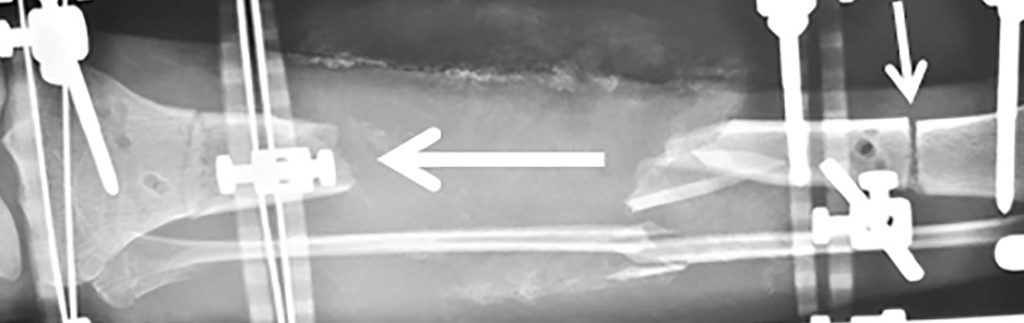
Researchers Dr Khay-Yong Saw, Dr Caroline Jee, Ms Amal Dawam, and Ms Alisha Ramlan from the Kuala Lumpur Sports Medicine Centre, Malaysia, and Dr Adam Anz, Andrews Institute, Florida, USA, recently showed how stem cell therapy can be used as a pioneering treatment in articular regeneration of the knee. There is potential to apply this technology to other musculoskeletal damage […]
Read More… from Stem cell therapy brings new life to musculoskeletal regeneration
Two-photon polymerization for advanced sensor manufacturing
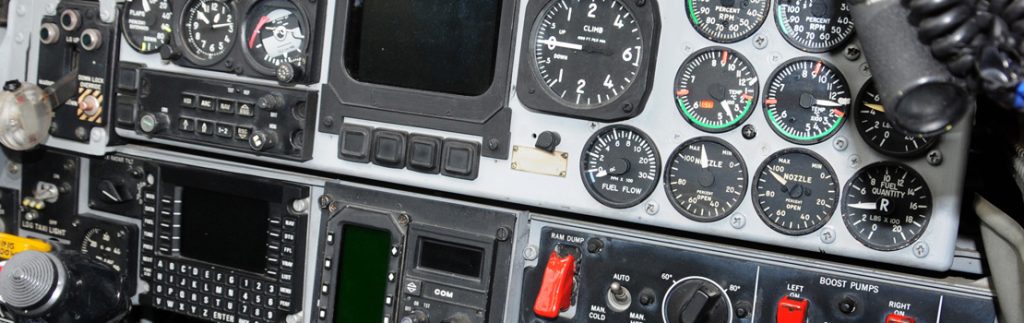
Sensors built from microscopic optical components could offer numerous benefits, but so far their reach has been limited by shortcomings in 3D manufacturing techniques on non-conventional platforms. In their research, Dr Hengky Chandrahalim, Capt Jeremiah Williams, and colleagues at the US Air Force Institute of Technology, have overcome this challenge through the technique of ‘two-photon polymerization’, which allows them to […]
Read More… from Two-photon polymerization for advanced sensor manufacturing
How medical schools can evolve to tackle gun violence

Despite the shocking levels of gun violence in the USA and in the Americas, medical practitioners are taught little more than dealing with the direct biologic outcomes of bullets. Like other public health burdens, each tragic event results from the interplay of complex behavioural health, environmental, and social issues. Understanding gun violence as a disease requires examining these complex issues […]
Read More… from How medical schools can evolve to tackle gun violence
Does police officer deception undermine US constitutional law?

Deceptions by law enforcement officers raise important questions about constitutional law and the principles of criminal justice. Professor Charles MacLean is Director of Professional Peace Officer Education at the US Metro State University’s School of Law Enforcement and Criminal Justice in Minnesota, and Lecturer in Constitutional Law at the University of Wisconsin-Eau Claire. He considers the question of the ‘social […]
Read More… from Does police officer deception undermine US constitutional law?
Conjugation chemistry creates affordable childhood vaccines

The immune system provides a formidable defence against pathogens. However, many bacteria possess a protective sugar polymer coat. In children, the immune system does not respond to these polymers unless they are chemically linked to a carrier. This is the basis of conjugate vaccines, a powerful but expensive means to fight diseases like pneumonia, the leading cause of death in […]
Read More… from Conjugation chemistry creates affordable childhood vaccines
The heart of the matter: Clinical electrophysiology and beyond

Arrythmia – abnormal heart rhythm – can be life-limiting and even life-threatening. In this interview, Research Outreach talks to Professor Benjamin J Scherlag of the University of Oklahoma, USA, about his pioneering research into what was the entirely new field of cardiac electrophysiology. We learn about the ‘His bundle’, ganglionated plexi, and how it is possible to treat the heart […]
Read More… from The heart of the matter: Clinical electrophysiology and beyond
Using patient datasets to track COVID-19 prevalence

Obtaining an accurate picture of COVID-19 cases has provided a major challenge throughout the pandemic. Changes in testing methods and skewed selection of higher-risk groups may bias the results. Dr Amy Hou, Dr Genevieve Pang, and Dr Lorrin Pang at the Hawaii State Department of Health, Maui District Health Office, US, propose a novel way to estimate local prevalence of […]
Read More… from Using patient datasets to track COVID-19 prevalence
Improving the safety of unmanned aerial systems: A fuzzy logic–AI approach

With their ever-increasing capabilities and applications, the use of unmanned aerial systems (UAS) is set to soar. This creates an urgent need for solutions that safely manage UAS operations in congested low-altitude airspace. Some advanced UAS-control methods are based on reinforcement learning techniques, but these are not yet fully validated. Taking a fuzzy logic-based approach to this problem are Dr […]
Read More… from Improving the safety of unmanned aerial systems: A fuzzy logic–AI approach