
Tag: USA
What can Occam’s razor principle tell us about theories of dark matter?
Today, physicists have devised dozens of theories to explain the nature of dark matter. So far, however, not one of them has gained concrete proof through experiments. To narrow these theories down, Professor Eugene Oks at Auburn University, USA, advocates applying an important philosophical concept, which is often used when considering complex problems with many candidate solutions. Using Occam’s razor, […]
Read More… from What can Occam’s razor principle tell us about theories of dark matter?
Exiguobacterium degradation of polystyrene: Enlisting bacteria in the war against plastic
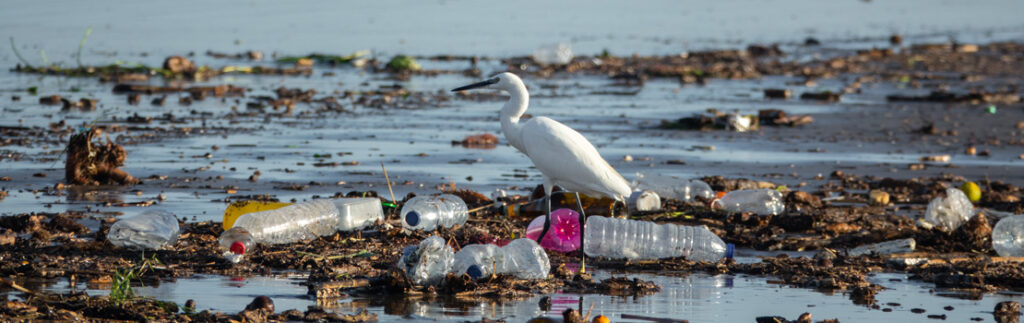
Polystyrene is a chemically stable recalcitrant plastic that pollutes many natural environments. Unfortunately, few mechanisms can break down this man-made polymer into its naturally occurring components. Research into the polystyrene-digesting capabilities of the bacteria genus Exiguobacterium sp RIT 594 by Dr André Hudson and his team at the Rochester Institute of Technology in New York, USA, has uncovered the specific […]
How electrons and phonons promote heat transfer in material systems

Miniaturisation is one of the key features of current and future technologies for information processing and control. However, the ability to reduce the size of an electronic component is limited by a decrease in electrical conductivity and an increase in thermal energy dissipation as the device approaches the nano-scale regime. By studying the electronic and vibrational characteristics of high-purity iridium […]
Read More… from How electrons and phonons promote heat transfer in material systems
Making organic chemistry fun, meaningful, and accessible

Many undergraduate students perceive organic chemistry modules as make-or-break courses in their university career. They often resort to rote memorisation, which not only alienates them but prevents them understanding the discipline in depth. Social and economic factors may also be significant barriers in the study of this fundamental subject. With examples drawn from her extensive teaching experience, Dr Irosha N […]
Read More… from Making organic chemistry fun, meaningful, and accessible
Unlocking iodine’s true potential
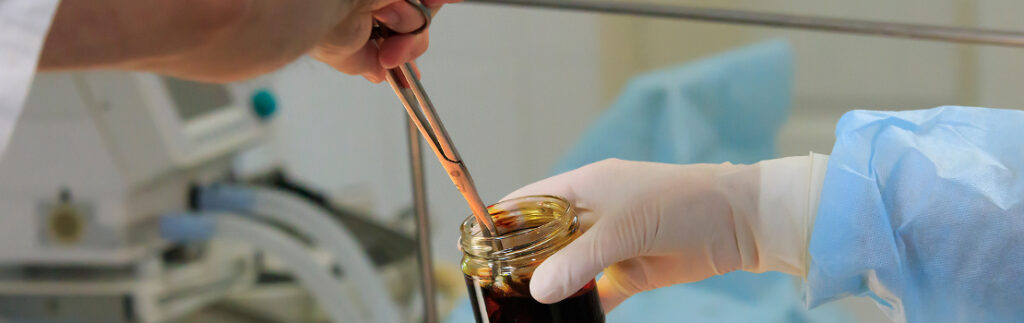
Despite it being a cornerstone antibacterial application in hospitals, ‘iodine’ is often used with reservations about staining and toxicity. Such reservations have historical roots founded on unfortunate misconceptions that also mask the remarkable properties of an iodine solution’s active agent – molecular iodine. Dr Jack Kessler, Douglas C Spitz, and colleagues at I2Pure, USA, have demonstrated that molecular iodine is […]
Microbiomes – the key to a healthier planet?
Microbiomes are communities of microorganisms living on or in animals, helping to keep them healthy. Changes in the composition of microbiomes could make wildlife more vulnerable to diseases which may be zoonotic – transmissible to humans – so monitoring them could help us to predict outbreaks of disease and protect global health. Dr Andrew Bartlow and colleagues at the Los […]
Read More… from Microbiomes – the key to a healthier planet?
FAME – the green revolution of conventional biodiesel
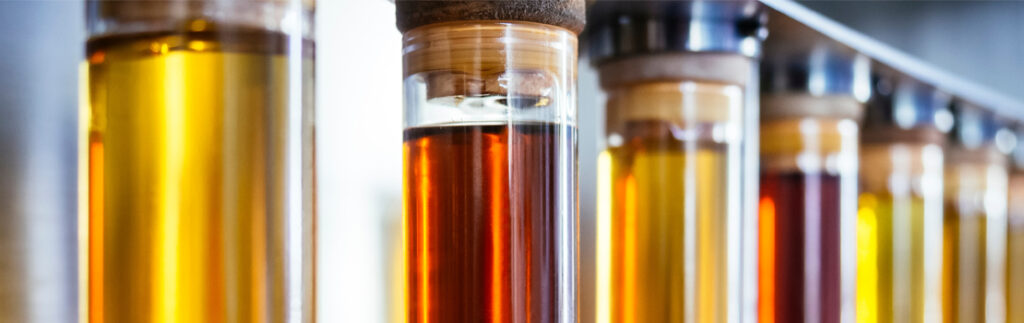
The global shift away from petrochemical production towards bio-based solutions has given a boost to conventional biodiesel producers. However, they’re facing a challenger ‘from the inside’ – renewable biodiesel. Undaunted, a team of chemists and engineers from Airable Research Lab in the USA, led by Dr Dylan Karis, has revealed that conventional biodiesel – or fatty acid methyl ester (FAME) […]
Read More… from FAME – the green revolution of conventional biodiesel
Do bees farm microbes? Rethinking what it is to be a bee

Bees have not been eating what we thought they were. The work of Dr Prarthana Dharampal and Dr Shawn Steffan, University of Wisconsin, USA, shows bees are not strict vegetarians requiring just pollen and nectar for food. Larval bee health is also reliant on eating the microbes that are feeding on the pollen supplies. The bee larvae are further up […]
Read More… from Do bees farm microbes? Rethinking what it is to be a bee
Pushing boundaries: Peter McLaren on the importance of critical pedagogy inside and outside the classroom

Peter McLaren is Distinguished Professor in Critical Studies and Co-Director and International Ambassador for Global Ethics and Social Justice of the Paulo Freire Democratic Project at Chapman University in the USA. Regarded as one of the leading architects of critical pedagogy, McLaren re-envisions the philosophy of Freire in the context of contemporary issues, including the struggle of the LGBTQ community, […]
SecurePortIV®: The cyanoacrylate adhesive providing a new gold standard for all vascular access care

Around two billion peripheral intravenous catheters are inserted each year globally. However, a large percentage of these lead to complications, such as infections or becoming dislodged, requiring replacement in order for therapy to continue. Dr Sheng Zhang at Adhezion Biomedical, USA, has been involved in developing an adhesive, SecurePortIV®, which secures intravenous catheters by holding them in place and sealing […]