
Tag: USA
Mechanochemistry: A new route to sustainable polymer recycling

Plastics and rubbers are some of the most important materials in advanced societies, and hundreds of millions of tonnes are produced every year. Devising efficient and cost-effective ways to recycle these materials has become a crucial environmental concern. Although degradable plastic-based materials can be produced, their practical use is limited by their vulnerability under environmental stress. Professor Junpeng Wang and […]
Read More… from Mechanochemistry: A new route to sustainable polymer recycling
The flipside of DNA: Flipons and alternative nucleic acid structures
DNA sequences called flipons can adopt alternative DNA structures. New research suggests that they have important biological roles. In a quest to further unravel the mystery of these dynamic DNA elements, Dr Alan Herbert, InsideOutBio Inc, USA, and colleagues have spent years conducting experiments at the cutting edge of genomic and molecular science. Now, they demonstrate that by targeting flipons, […]
Read More… from The flipside of DNA: Flipons and alternative nucleic acid structures
Loneliness and social isolation: How can we protect our mental health and cognitive functions?

It is well known that social isolation can cause poor mental and physical health. Our recent global experience of compulsory social isolation during the COVID-19 pandemic has created a need to find new ways to prevent its devastating consequences, such as anxiety-induced cognitive decline, from manifesting. Dr Jing Liang and her team at the University of Southern California’s Mann School […]
Regulating RNA interference by modifying RNA backbone with amides
Professor Eriks Rozners and colleagues at Binghamton University in New York, USA, are using innovative nucleic acid chemistry to modify RNA-based technologies such as RNA interference (RNAi) and Clustered Regularly Interspaced Short Palindromic Repeats (CRISPR) to enhance their utility in molecular biology. These technologies suffer from off-target effects that limit their clinical utility. By replacing phosphates in the backbone with […]
Read More… from Regulating RNA interference by modifying RNA backbone with amides
The cold, dark secrets of the Universe in few-body physics
Understanding fundamental processes in physics, particularly physics beyond the Standard Model, is no easy task. Experiments and theories looking for new general theories to describe many of the phenomena that are missing in the Standard Model focus on particle physics experiments at places like CERN. Professor Jesús Pérez Ríos of the atomic, molecular, and optical (AMO) physics group at Stony […]
Read More… from The cold, dark secrets of the Universe in few-body physics
Cleft lip simulation: A step closer to achieving surgical excellence

Surgical training is a long and laborious process, traditionally performed by learning to operate on actual patients under a senior surgeon’s supervision. However, with surgical techniques getting ever more sophisticated and standards of care increasing, it is not always easy for surgical trainees to access the required number of surgical cases. Surgical simulation has recently become the solution to this […]
Read More… from Cleft lip simulation: A step closer to achieving surgical excellence
Empowering communities in the face of grand challenges: The critical role of local food systems and democratized science

Feeding a rapidly growing global population is nearly impossible. Food production is increasingly controlled by powerful organizations, climate change is negatively impacting food production, inequality is growing globally, and menacing geopolitical shifts are likely to make matters worse. Dr William Lacy, a leading sociologist and Professor Emeritus in the Department of Human Ecology at the University of California Davis, USA, […]
Simple blood tests could predict immunotherapy effectiveness
Despite the extensive use of immunotherapy in patients suffering from head and neck squamous cell carcinoma, this therapy has significant limitations. Not everyone responds to treatment and current therapies can have serious adverse side effects. When working at the Johns Hopkins School of Medicine, Sidney Kimmel Comprehensive Cancer Center, USA, Dr George Laliotis and his team discovered that biochemical factors, measured […]
Read More… from Simple blood tests could predict immunotherapy effectiveness
The heart of the matter: Elamipretide in the treatment of Barth syndrome

Barth syndrome (BTHS) is an ultra-rare but debilitating genetic disease affecting cell mitochondria. High infant mortality due to cardiac complications and a weakened immune system significantly decrease life expectancy. Current medications treat symptoms but not the cause, leaving an unmet clinical need to develop effective treatments that target the underlying pathology. Dr Hani N Sabbah, Professor of Medicine at Wayne […]
Read More… from The heart of the matter: Elamipretide in the treatment of Barth syndrome
Artemis:DNA-PKcs: A new drug target for cancer treatment?
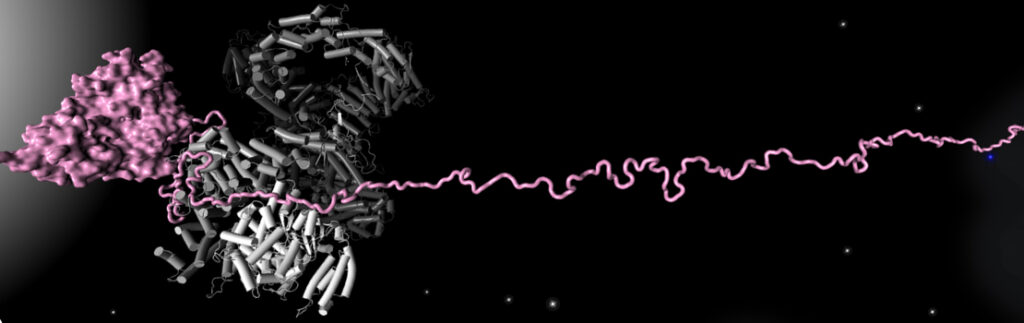
Cells encounter DNA double-strand breaks (DSBs) every day. Because they can lead to loss of genetic information, DSBs must be repaired. Nonhomologous DNA end joining (NHEJ) is the major pathway for repairing DSBs, and the key enzymes include Artemis nuclease and DNA-dependent protein kinase catalytic subunit (DNA-PKcs). For the first time, Dr Go Watanabe and his team from the University […]
Read More… from Artemis:DNA-PKcs: A new drug target for cancer treatment?