
Neoliberal traits in school curricula-instructional design: Post-pandemic opportunities for change towards the common good

Calls for systemic change to Western education systems are growing louder, following seismic social activism over the past few years and the emergence of an increasingly connected and issue-savvy youth. […]
Chemical synthesis to tackle tuberculosis

Tuberculosis (TB) – the world’s most deadly bacterial infectious disease – kills around 1.5 million people every year, and its treatment remains challenging. Dr Jeffrey Buter at the University of […]
Neuropathological changes in Alzheimer’s disease linked to four key proteins

Alzheimer’s disease (AD) is characterised by progressive and irreversible loss of memory and thinking skills. Using sensitive cutting-edge techniques, Professor Rafael Luján and his collaborators at Castilla-La Mancha University, Spain, […]
Read More… from Neuropathological changes in Alzheimer’s disease linked to four key proteins
Omnipresent microplastic

Microplastics have invaded every crevice, nook, and cranny on our planet and they are here to stay. Remember that plastic bottle you threw away back in the ‘80s? Well, it […]
Predicting the origin of mutations from tumour and germline data

Genetic sequencing is an affordable screening process that helps people understand the risks of developing a specific form of cancer in their lifetime. They can learn about the impending risks […]
Read More… from Predicting the origin of mutations from tumour and germline data
Perspectives of the information technology industry in Armenia

Industry in Armenia Armenia is a landlocked country in the South Caucasus region that shares borders with Azerbaijan, Georgia, Turkey and Iran. The country covers an area of 29,800 square […]
Read More… from Perspectives of the information technology industry in Armenia
The main Himalayan thrust and geometrical parameters
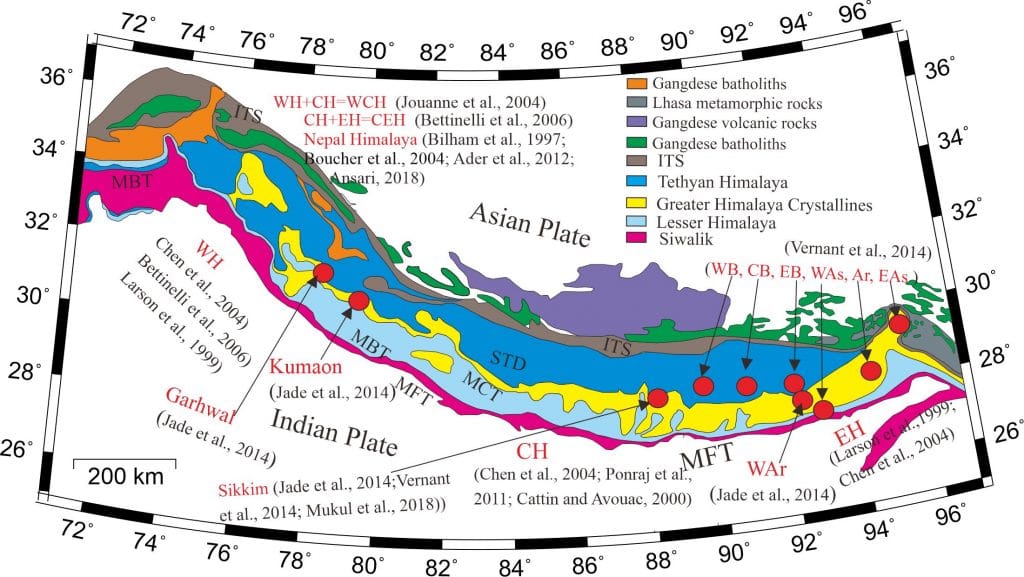
The near-surface expression of the Main Himalayan Thrust (MHT) is called the Main Frontal Thrust (MFT) (Gansser, 1983; Lavé and Avouac, 2001). There are another two major boundaries which are […]
Read More… from The main Himalayan thrust and geometrical parameters
Quantum carpets from tumbling molecules: Manipulating molecular rotation by electromagnetic fields
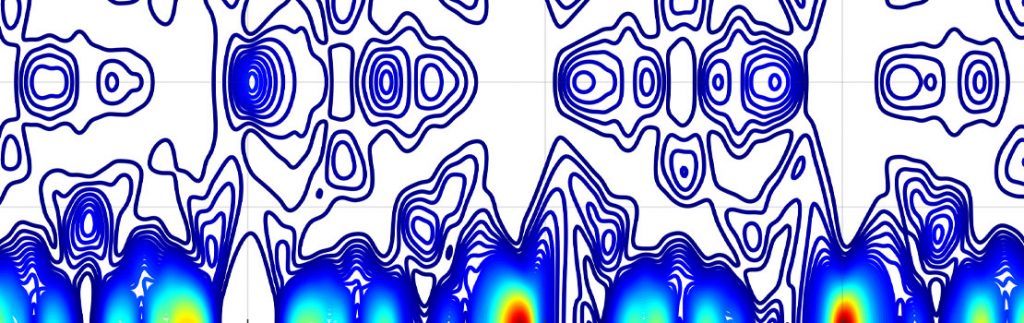
Molecules are comprised of charged particles whose spatial distribution is or could be distorted, lending the molecules a handle by which they can be manipulated via external electromagnetic fields. Dr Burkhard […]
Designing disorder at the atomic scale

The crystal structures of solids can exhibit a vast array of different atomic arrangements, which may also change depending on conditions, temperature, pressure, etc. In new research, a team led […]
The TO-10 site in NW Italy is unsuitable for hosting the national nuclear waste repository
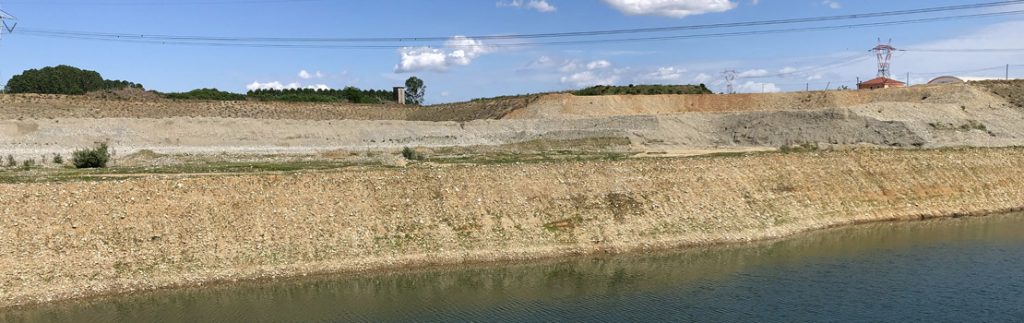
The storage and disposal of radioactive waste is an issue of global concern. Italy has recently started the procedure of identifying suitable sites for its national repository of low- and […]