
Tag: Germany
Monitoring photonic crystal fibre fabrication in real-time
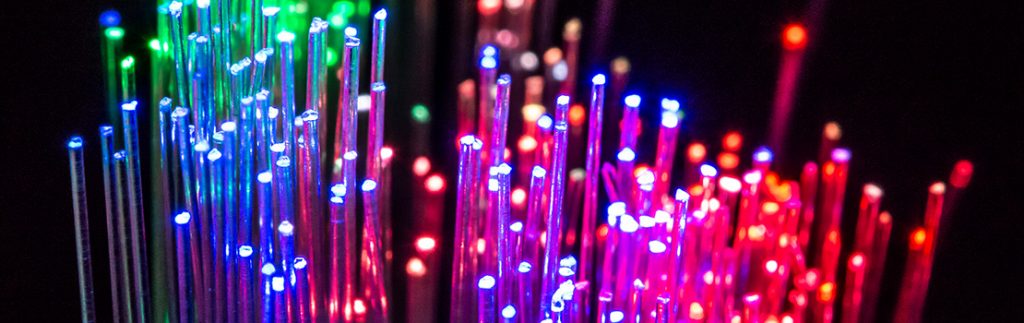
Photonic crystal fibres (PCFs) were first explored in the 1990s, and as conventional optical fibres have revealed their limits, interest in PCFs has only increased further. PCFs use a specific pattern of air-holes which stretch the length of the fibre to guide light. These delicate microstructures are functionally essential, but currently there is no way to monitor their production in […]
Read More… from Monitoring photonic crystal fibre fabrication in real-time
The Lattice, the Clock, and the Microscope: A Next-Generation Quantum Simulator
Understanding systems of many interacting quantum particles remains one of the grand challenges in physics. Simulating such systems on supercomputers is impossible for more than a few particles, but promising approaches based on quantum simulators are on the horizon. Dr Sebastian Blatt’s team at the Max-Planck-Institute of Quantum Optics, and their collaborators, have made significant strides to extend the capabilities […]
Read More… from The Lattice, the Clock, and the Microscope: A Next-Generation Quantum Simulator
Cryo-electron tomography and synaptic transmission in the brain
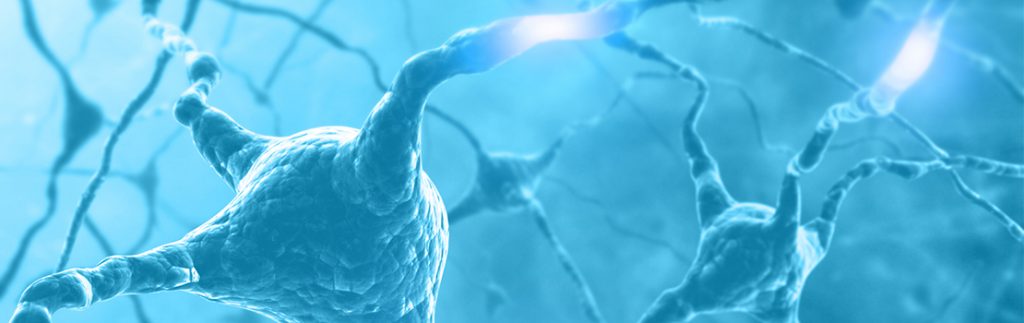
The transmission of information between brain cells is regulated by complex loops of biochemical processes. Neurotransmitter molecules are released in the intercellular space by an electrically stimulated neuron and bind to receptors in a different neuron, thus establishing a connection between these cells. By combining cryo-electron microscopy and tomography of vitrified brain samples, Dr Vladan Lučić at Max Planck Institute […]
Read More… from Cryo-electron tomography and synaptic transmission in the brain
Capturing three-dimensional cell structure with X-ray tomography

Seeing cells is no easy task. Most cells are smaller than a tenth of the size of a human hair, making them impossible to see by eye. Optical microscopes, with the help of cell-staining to colour cells, can help us peer into the invisible world of cells. However, they only show us a 2D image of a very thin slice […]
Read More… from Capturing three-dimensional cell structure with X-ray tomography
A new weapon to boost cancer immunotherapy

In recent years, immunooncology has paved new avenues for effective treatment across cancer types. In addition to cytotoxic chemotherapy, we can now harness the power of the human immune response against malignant cells. However, immunotherapy is not perfect, and as always, cancer has mechanisms to evade these attacks. Dr Svetlana Hamm, Head of Research and Translational Medicine at 4SC in […]
Renewable energy concepts for addressing climate change

Climate change is real, is here, and it will not go away unless we do something. Based on current scientific advancements on energy systems, energy storage, renewable energy options, and understanding of the Earth’s feedback mechanism, there is hope that global efforts could help avoid an environmental catastrophe. However, the action plan needs to be global, based on collective approaches, […]
Read More… from Renewable energy concepts for addressing climate change
Listening to the city: Architecture as soundscape

Sound is an integral part of many people’s daily life, and the architectural spaces that surround us shape and impact the quality of urban sound. Street performers, such as buskers, contribute to the city soundscape, and while in the past they may have been treated as a nuisance, now they are more readily accepted as contributing to the vitality of […]
Read More… from Listening to the city: Architecture as soundscape
Income segregation and incomplete integration of Islam in the Paris metropolitan area
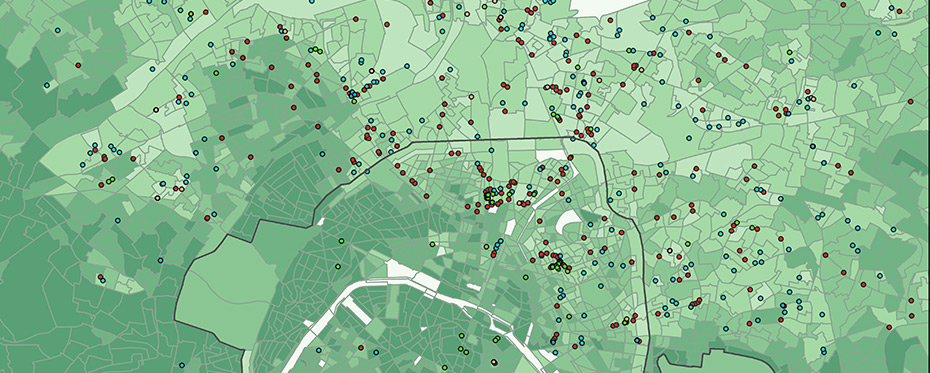
By law in France no data about ethnicity or religion is recorded in official statistics. The homegrown, pseudo-religious Islamically-inspired terror attacks of the 21st Century have, in part, been seen as a result of a lack of geographical and economic integration among Muslim populations. The research of Lucas G. Drouhot, research fellow at the Max Planck Institute for the Study […]
Searching for axions: Revealing the dark matter particle

Dark matter is one of the central mysteries of modern cosmology. Even after many years of investigation into the true nature of this enigmatic component of our Universe, every search for its cause has so far come up short. Dr David J. E. Marsh at the University of Göttingen believes that the solution lies with a fundamental particle which was […]
Read More… from Searching for axions: Revealing the dark matter particle
IRAND: Helping to preserve children’s and youth drawings of the 20th century

Professor Dr Jutta Ströter-Bender of Paderborn University is co-founder of the International Research and Archives Network (IRAND) that is preserving and archiving children’s and youth drawings of the 20th century. IRAND views these endangered collections as historical documents, worthy of preservation and PhD level research. The network is a Cooperating Institution of the Sub-Committee on Education and Research (SCEaR), UNESCO […]
Read More… from IRAND: Helping to preserve children’s and youth drawings of the 20th century