
Tag: Japan
Understanding the EGFR mutation
aids the fight against lung cancer
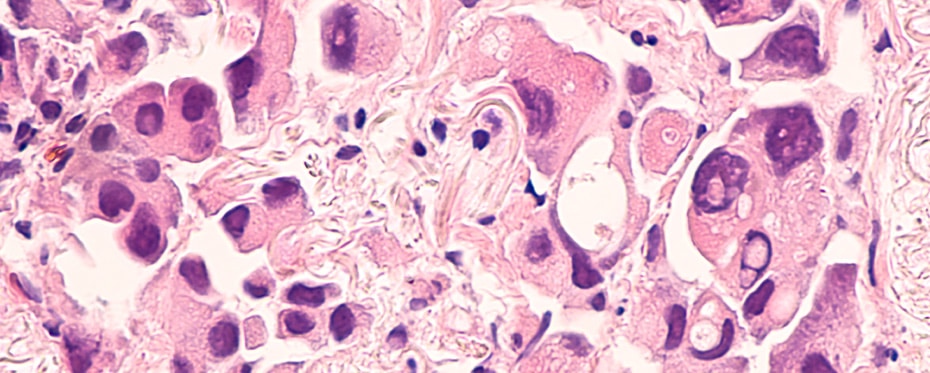
Genetic mutations are known to be responsible for several different types of cancer. One type, known as non-small cell lung cancer, is sometimes caused by mutations in a gene called EGFR. A group of drugs called tyrosine kinase inhibitors are often used to treat patients with this type of cancer. Unfortunately, patients can develop genetic alterations, namely mutation, amplification (an […]
Read More… from Understanding the EGFR mutation
aids the fight against lung cancer
Unpacking primary biliary cholangitis and its burden in Japan
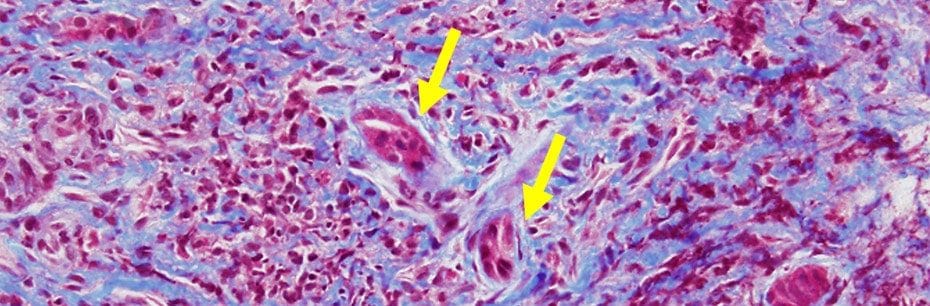
Itch, fatigue, anxiety, abdominal pain. These are just some of the symptoms faced by primary biliary cholangitis (PBC) patients. The chronic autoimmune disease sees white blood cells attack bile ducts in the liver, causing bile overflow, cell damage and potentially scarring and liver failure. Although it can be successfully managed, some symptoms can linger, hampering patients’ health-related quality of life […]
Read More… from Unpacking primary biliary cholangitis and its burden in Japan
This polymer hardens as it heats up

Dr Takayuki Nonoyama, Assistant Professor of the Faculty of Advanced Life Science at Hokkaido University, has made a polymer material with a rather strange property: at room temperature, it is rubbery, and at higher temperatures it solidifies. Cool it back down, and it becomes rubbery again. To create a material which exhibits this counter-intuitive behaviour, Nonoyama took inspiration from the proteins in […]
Cooperation with autonomous machines through culture and emotion

People tend to be less cooperative with machines than with humans. Dr Celso de Melo, a computer scientist with the US Army Research Laboratory, and Dr Kazunori Terada, an Associate Professor at Gifu University, Japan, demonstrate how incorporating simple cultural and emotional cues, such as virtual faces showing positive or negative emotion, can help mitigate unfavourable bias toward machines and […]
Read More… from Cooperation with autonomous machines through culture and emotion
Rice husk biochar with beneficial microbes: A promising agricultural inoculant and soil ameliorant

The research of Shohei Ebe and Takashi Ano from Kindai University into the relationship between a microbe and rice husk biochar (RHB) suggests the latter is an activator of beneficial microbes that can be used to combat phytopathogenic microorganisms. Having isolated a novel lipopeptide producing Bacillus sp. that benefits from RHB presence in the soil, these are promising insights into […]
The anxiety-reducing effects of cannabidiol treatment in teenagers with social anxiety disorder

Nobuo Masataka, Professor of Primate Research Institute at Kyoto University, Japan has recently completed and published exciting research into the treatment of the debilitating condition of social anxiety disorder with cannabidiol, a constituent of cannabis. Social anxiety disorder has a major impact on sufferers and the condition is becoming increasingly prevalent. Here, Professor Masataka’s promising new research findings are presented […]
White identity in the Caribbean

What does it mean to be white in a black majority population? That’s the question addressed in ongoing research into racial identity and ethnicity by Michiru Ito from Japan’s Otsuma Women’s University. Focusing on ‘whiteness’ in the Caribbean islands of Barbados and Trinidad, Ms Ito’s work reveals substantial differences between the two islands in how people who identify as white […]
Adaptation to climate change and increasing CO2 in rice
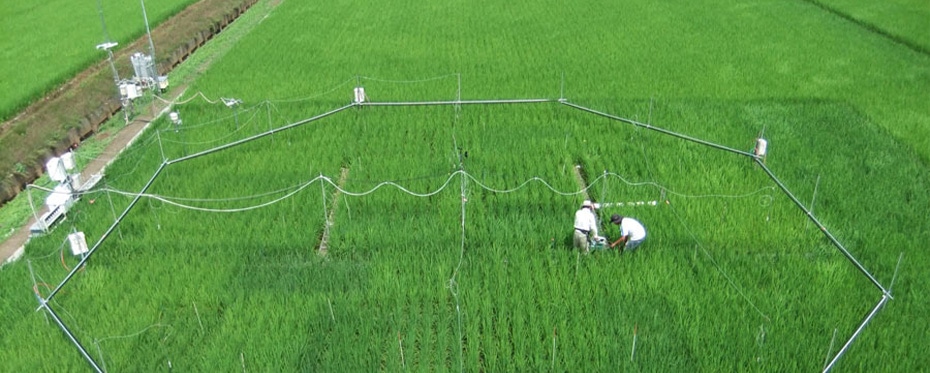
Improving yield response in rice under increasing atmospheric carbon dioxide (CO2) concentrations will help this crop adapt to the changing climate. Dr Toshihiro Hasegawa, a plant physiologist at Tohoku Agricultural Research Center in Japan, studies the effects of climate change on rice yield and quality. The FACE (free-air CO2 enrichment) platform provides experimental facilities under open-field conditions for modelling how […]
Read More… from Adaptation to climate change and increasing CO2 in rice
Protein structure prediction with machine learning

Shuichiro Makigaki and Dr Takashi Ishida, from the Department of Computer Science at Tokyo Institute of Technology, are developing a new sequence alignment generation model that employs machine learning and dynamic programming to predict protein structures. This novel methodology can also be applied to homology detection which is fundamental to bioinformatics. A protein’s function is dictated by its three-dimensional structure. If the structure is […]
Read More… from Protein structure prediction with machine learning
Double-suicide in modern Japan: An ageing society’s crisis

Suicide, double-suicide, and homicide-suicide are a significant public health concern in Japan. In particular, double-suicide, which was relatively common among lovers immediately after the Second World War, has re-emerged in Japan among the elderly and their overburdened carers. Professor Fumiko Satoh and colleagues from the Kitasato University School of Medicine have examined prevalence rates and proposed likely reasons for double-suicide […]
Read More… from Double-suicide in modern Japan: An ageing society’s crisis