
Tag: Japan
Crystal engineering for solid-state molecular recognition
Host-guest interactions in crystalline frameworks can be exploited to selectively and reversibly adsorb molecular species within a crystalline lattice. This process is important in a variety of technological fields, including gas separation, catalysis, trapping of pollutants and carbon capture. Professor Akiko Hori (Shibaura Institute of Technology) is developing chemical approaches for optimising the building blocks of these solid-state systems. Perfluorination […]
Read More… from Crystal engineering for solid-state molecular recognition
Lighting Up Iridium Complexes

Iridium (Ir) is a fascinating element. A rare metal found in the Earth’s crust, Ir can bond with a variety of other elements to make different metal complexes. Such complexes have unusual and interesting interactions with light, with many complexes exhibiting strong luminescence on long timescales. This has made them widely used as molecules for bioimaging probes and organic light […]
Predicting post-seismic liquefaction through geological response analysis
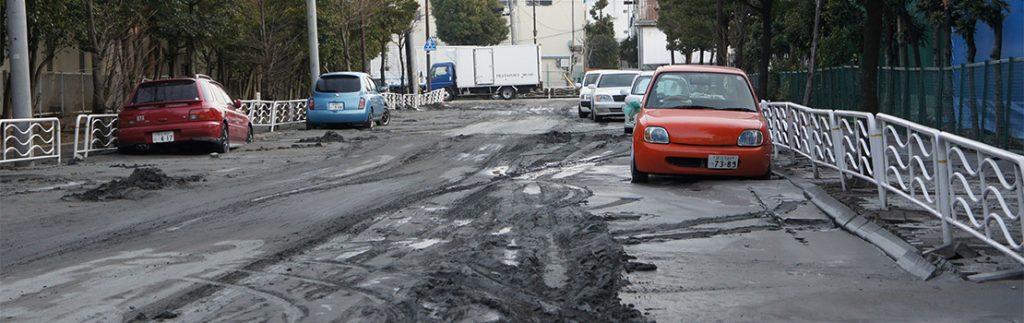
During liquefaction, solid sandy ground behaves like a liquid, posing a significant threat in earthquake-prone regions. Seismic waves cause water-saturated sandy sediments to flow, resulting in ground subsidence and flooding. To address gaps in our understanding, Prof Yukitake Shioi from the Hachinohe Institute of Technology in Japan applied a finite element method model to observations from the 1994 Far-Off Sanriku […]
Read More… from Predicting post-seismic liquefaction through geological response analysis
Fragment-based design of isoquinoline derivatives as anti-inflammatory drugs

Fragment-based drug discovery (FBDD) is a well-established high-throughput screening method for drug generation. Fragment molecules used in FBDD tend to be structurally less complex than the compounds used in conventional high-throughput screening techniques. Dr Masakazu Atobe from Asahi Kasei Pharma Corporation in Japan and his colleagues have developed a methodology that can be applied to the discovery of effective drugs […]
Read More… from Fragment-based design of isoquinoline derivatives as anti-inflammatory drugs
Cell culture protocols for growing human keratinocytes in the laboratory

Dr Hitomi Fujisaki, Senior Research Scientist at Nippi Research Institute of Biomatrix in Japan, studies human epidermal keratinocytes (skin cells) and cancer cells using two- and three-dimensional type I collagen substrates. Through her research, she aims to understand more about the ways in which these cells interact with the substrate that they are grown on, and how this relationship can […]
Read More… from Cell culture protocols for growing human keratinocytes in the laboratory
The child deficit and the changing value of children in Asia

Since the 1960s, Asia has experienced a dramatic decline in fertility rates. Philip Morrison, Professor Emeritus at Victoria University of Wellington, New Zealand, asks whether this shift has been accompanied by a reduction in the value of children as inferred from the European experience. If so, one might expect a convergence of the ideal and actual family size and a […]
Read More… from The child deficit and the changing value of children in Asia
‘Mosquito method’ avoids crossed wires in optical circuitry
Electric circuitry – energy-wasting and prone to interference – is overdue an overhaul. In several industries optical fibres allow faster data transfers, and ‘fibre’ is becoming synonymous with ‘faster internet’. As technologies like cloud storage drive a desire for ever-increasing data transfer speeds, optical fibres are expected to make their way inside computers. This requires a new set of manufacturing […]
Read More… from ‘Mosquito method’ avoids crossed wires in optical circuitry
That’s disgusting! How primates decide what not to eat

All animals need to find a way to avoid contact with pathogens when they are eating. For primates, Dr Cécile Sarabian, based at Kyoto University Primate Research Institute in Japan, shows that many species either avoid food contaminated with faeces or thoroughly handle the food, trying to clean it before eating. For the researcher, this is proof that this behaviour […]
Read More… from That’s disgusting! How primates decide what not to eat
Kibi Plateau: A stable location within active Japan

The Japan Islands experience some of the most extreme earthquakes and volcanoes in the world. Located on the subduction junction between four different continental and oceanic plates, the islands are at risk from large earthquakes and volcanoes as the crust moves below. Dr Tetsumaru Itaya is a geologist at the Institute of GeoHistory of Japan Geochronology Network, and his research […]
Read More… from Kibi Plateau: A stable location within active Japan
A new biological approach to control harmful algal blooms
Harmful algal blooms can be extremely destructive for local marine life. The acceleration of geographic expansion and intensity of these blooms on a global scale associated with climate change have recently been reported. September 2019, the first report published from the United Nations’ Intergovernmental Panel (IPCC) linked climate change to harmful algal blooms. Existing methods to control them are often […]
Read More… from A new biological approach to control harmful algal blooms