
Tag: Australia
Out-of-field teaching: New teachers survive under pressure

It is the nightmare of many early-career teachers: to have to teach a subject that’s not your specialism to a class of students who sense your fear. In newly published research, Dr Susan Caldis from Macquarie University in Australia finds that out-of-field teaching is a major issue which particularly affects teachers as they transition from initial teacher education programmes into […]
Read More… from Out-of-field teaching: New teachers survive under pressure
Considering environmental impact in happiness rankings

Most, if not all, people want to live a happy life, so surely a measure of a country’s success as a nation is how happy its citizens are? Most international success indices rank countries according to how they perform against various measures and include happiness as a key value, but fail to include the cost, especially to others. Emeritus Professor […]
Read More… from Considering environmental impact in happiness rankings
Technology-facilitated sexual assault of children and adolescents: A retrospective audit

Dr Jo Tully and Dr Janine Rowse of the Victorian Forensic Paediatric Medical Service (VFPMS) have undertaken a vital retrospective audit of what they have termed technology-facilitated sexual assault (TFSA) of children, where a sexual assault occurs following initial online contact. They found that TFSA forensic caseload has increased over the last 14 years. Victims were most likely to be […]
Australia’s approach to seed biosecurity

Globalised food production requires a heavy investment in biosecurity to prevent the spread and establishment of crop pests from imported seeds. Many countries already test incoming seeds for the absence of regulated pathogens, but with differing standards. In Australia, analyses by Dr David Dall from the Australian Government Department of Agriculture, Water and the Environment, and Dr Fiona Constable from […]
Structured expert judgment using the Classical Method

When complex decisions must be made while data is unavailable, structured expert judgment can be used to combine uncertainty distributions resulting from experts’ assessments. Roger Cooke, the Chauncey Starr Senior Fellow at Resources for the Future, and Emeritus Professor at Delft University of Technology, created the well-known Classical Model to quantify uncertainty using expert opinion. Together with Dr Tina Nane, […]
Read More… from Structured expert judgment using the Classical Method
Play like a team in Teams: How students engage with online social learning

As the global pandemic increasingly keeps students away from classrooms, school and university-level teaching has had to adapt to online environments. It is now more important than ever that we understand how students can engage with each other in the online learning process. Associate Professor Sarah Prestridge from Griffith University, Australia, studied how students interact with their peers and online […]
Read More… from Play like a team in Teams: How students engage with online social learning
Dousing the flames: A model approach to fire management
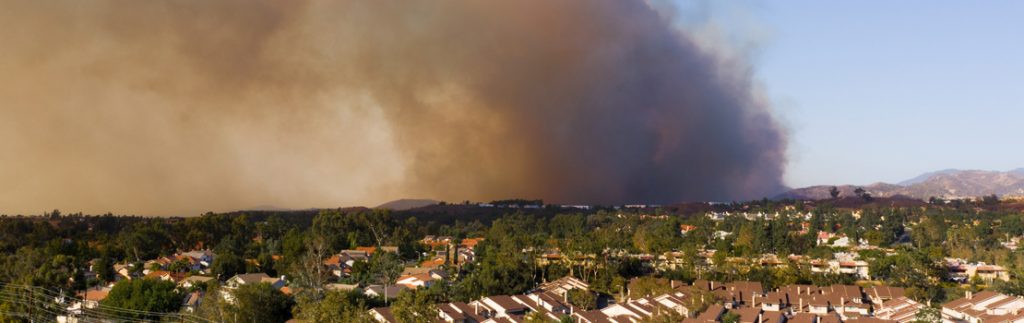
Fire management is complex, and strategies that work in one geographic area are unlikely to work in another owing to the unique geographical, ecological, and socioeconomic conditions. Professor Trent Penman at the University of Melbourne, Australia, is using Bayesian decision networks to model cost-effective wildfire management options (ie, types of prescribed burning). The model shows that no single cost-effective solution […]
Read More… from Dousing the flames: A model approach to fire management
Cointegration of causes of mortality as a possible measure of human ageing

Many of us can expect to live longer than previous generations. We might also surmise that one of the top five causes of mortality will prove our demise. Ultimately, however, most causes of death are linked to ageing, an inevitable process for which we have no direct measurement. Professor Séverine Arnold, of the University of Lausanne, has provided a potential […]
Read More… from Cointegration of causes of mortality as a possible measure of human ageing
Regulating emotions in young adulthood

Young adults with complex mental health needs often find it difficult to regulate their emotions and manage impulsive behaviour. Dr Kate Hall and her collaborators from Deakin University, Australia, have developed and evaluated an intervention that has applicability across diagnostic categories of mental health and substance use needs, and can be delivered alongside existing treatments. This intervention teaches young people […]
Lifestyle medicine and adverse childhood experiences

Adverse childhood experiences, which can be identified in up to 20% of the population, can underpin a wide range of diseases in later life. Professor Garry Egger, from Southern Cross University, Australia, suggests that this may occur via underlying systemic inflammatory processes. Understanding more about this association, and the role that lifestyle medicine may play in preventing and managing chronic […]
Read More… from Lifestyle medicine and adverse childhood experiences