
Tag: USA
Vitamin A: Seeing into the past, the present and the future
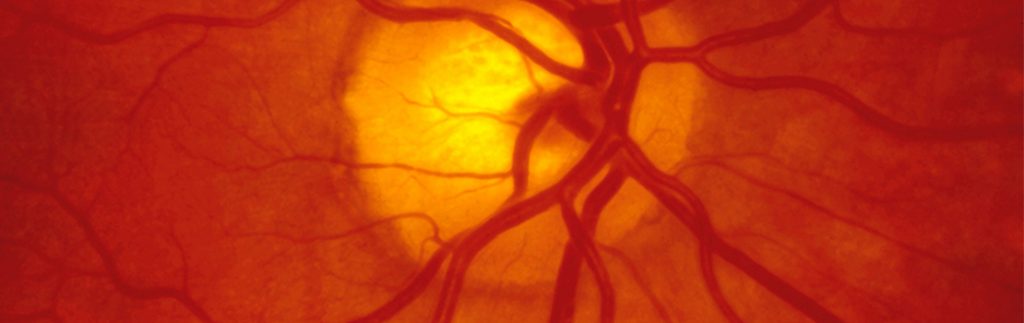
Why is Vitamin A critical to animal and human health, and what functions does it have in the body other than in vision? In this thought-provoking and informative interview, neuroscientist and Professor at Harvard University John Dowling takes us through the history of research into the topic, from the first mention of night blindness in 3500 BC to current and […]
Read More… from Vitamin A: Seeing into the past, the present and the future
Can cognitive impairments caused by methamphetamine use perpetuate the addiction cycle?

The repeated use of methamphetamine, or meth, is known to cause significant changes in the brain and cognitive impairments, which might strengthen or perpetuate a user’s addiction. Dr Carmela Reichel at the Medical University of South Carolina has conducted extensive research investigating the relationship between motivated meth use, meth-induced cognitive dysfunctions, and relapse. Her work has highlighted a number of […]
Dihydromyricetin shows promise as anxiety disorder treatment

Anxiety disorders are one of the most common mental illnesses, and social isolation can be a major source of contributing stress. Medications to treat these disorders, such as benzodiazepines, are available; however, they come with a range of downsides. In a recent study in mice, Prof Jing Liang’s team at the USC School of Pharmacy in the US discovered that […]
Read More… from Dihydromyricetin shows promise as anxiety disorder treatment
Human Leukocyte Antigens: The missing link in Alzheimer’s disease etiology

Alzheimer’s disease is a huge socioeconomic burden in developed countries. Recently, viral infections such as the herpes virus have been implicated in Alzheimer’s disease risk. However, it is unclear what the link between the two is. Professor Lisa M. James of the University of Minnesota, in collaboration with Dr Apostolos Georgopoulos and Dr Spyros Charonis, has utilised computational biology to […]
Read More… from Human Leukocyte Antigens: The missing link in Alzheimer’s disease etiology
Mutant protein in Siamese cats may be involved in neurodegenerative disorders
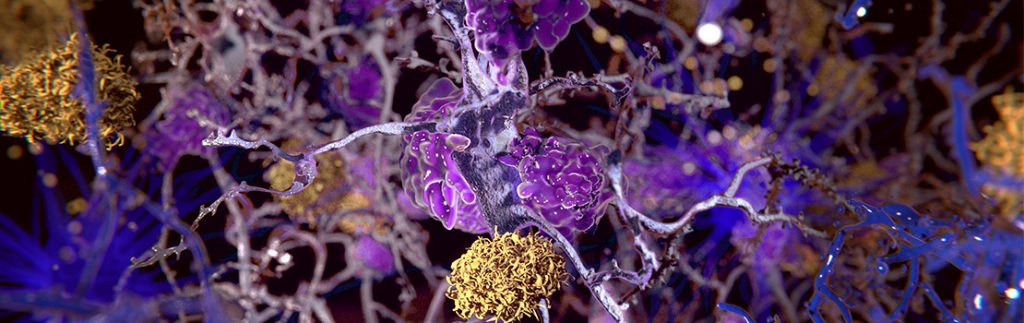
Siamese cats and humans share the same pathology when it comes to neurodegenerative disorders, such as Alzheimer’s disease. Dr Ingrid Niesman, based at San Diego State University, USA, believes it’s all down to a mutation in a protein called tyrosinase. The researcher wants to understand the impact of this malfunctioning protein, as well as use these cats as a basis […]
Read More… from Mutant protein in Siamese cats may be involved in neurodegenerative disorders
Regulators of protein degradation as potential treatments for neurodegenerative disease
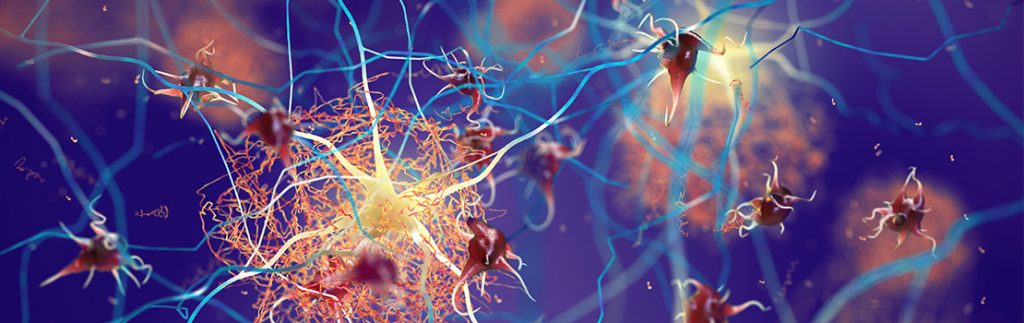
Neurodegenerative diseases, such as Alzheimer’s and Parkinson’s disease, are characterised by the accumulation of misfolded and damaged protein aggregates. Normally, proteins that are damaged or malfunctioning are destroyed by the ubiquitin proteasome system (UPS). However, the UPS itself is impaired in several instances of neurodegenerative diseases. Dr David Smith and his team at the School of Medicine, University of West […]
Hydrogen’s Second Flavour: A Solution to Dark Matter?
From their observations, astronomers widely predict that dark matter must comprise around 85% of all matter in the universe. So far, however, most theories about the nature of this mysterious source of mass have pinned their hopes on theoretical, as-yet undiscovered particles. Professor Eugene Oks from the Physics Department of the Auburn University has proposed that a more natural explanation […]
Read More… from Hydrogen’s Second Flavour: A Solution to Dark Matter?
Do we feel free when we make hard decisions? A psychological perspective on feelings of freedom in decision-making

Dr Stephan Lau, a Junior Professor at the Federal University of Applied Administrative Sciences in Berlin, is one of the first researchers to investigate experiences of freedom from a psychological perspective. Over the past decade, Dr Lau and his colleagues have conducted much research using a wide array of novel techniques to explore different factors which influence our experiences of […]
Exploring the Hibernating Behaviour of Smooth Softshell Turtles

In contrast with other species of aquatic turtles, softshell turtles cannot survive long without oxygen and this affects how they hibernate in the winter. Instead of fully burying themselves into the substrate at the bottom of a body of water and staying there, they must periodically raise parts of their body above the sediment to breathe in oxygen that is […]
Read More… from Exploring the Hibernating Behaviour of Smooth Softshell Turtles
Cell mechanics – from bench to bedside

All cells generate and respond to mechanical forces. The role of mechanical forces in cell biology has been understudied, but the forces are essential components of our physiology in health and disease. For example, they are involved in pathologies such as cardiac arrhythmias, muscular dystrophy and metastatic cancer. Dr Frederick Sachs from the University at Buffalo, New York, focuses on […]